Screen time vs outdoor time for kids: what the research says, and a screen that points outward
For parents weighing up screens and outdoor time, and wondering where a gadget like Scout fits. You'll get the research in plain words, its limits, and practical ideas for finding a balance.
We're a small team building a gadget for children, so we'd be fooling ourselves if we didn't think hard about screens. The question of screen time vs outdoor time for kids comes up with nearly every parent we talk to, usually with a sigh.
This piece is our honest attempt at an answer. It covers what the research says about time outdoors, where the evidence is weaker than the headlines, the idea behind Scout, and some practical ways to find a balance.
How much time are children spending outside?
Numbers here are hard to pin down, but the ones we have are striking.
In 2016, a survey of 2,000 UK parents of 5- to 12-year-olds found that 74% of children spent less than an hour a day playing outside, and one in five didn't play outside at all on an average day. UN rules say prisoners should get at least an hour of exercise in the open air every day, which is why the story ran under headlines comparing children's outdoor time with prison inmates'. It's worth knowing the survey was paid for by Persil, a detergent brand, for its "Dirt is Good" campaign, and that it asked parents to estimate. It's one survey, not the last word, but it clearly struck a nerve.
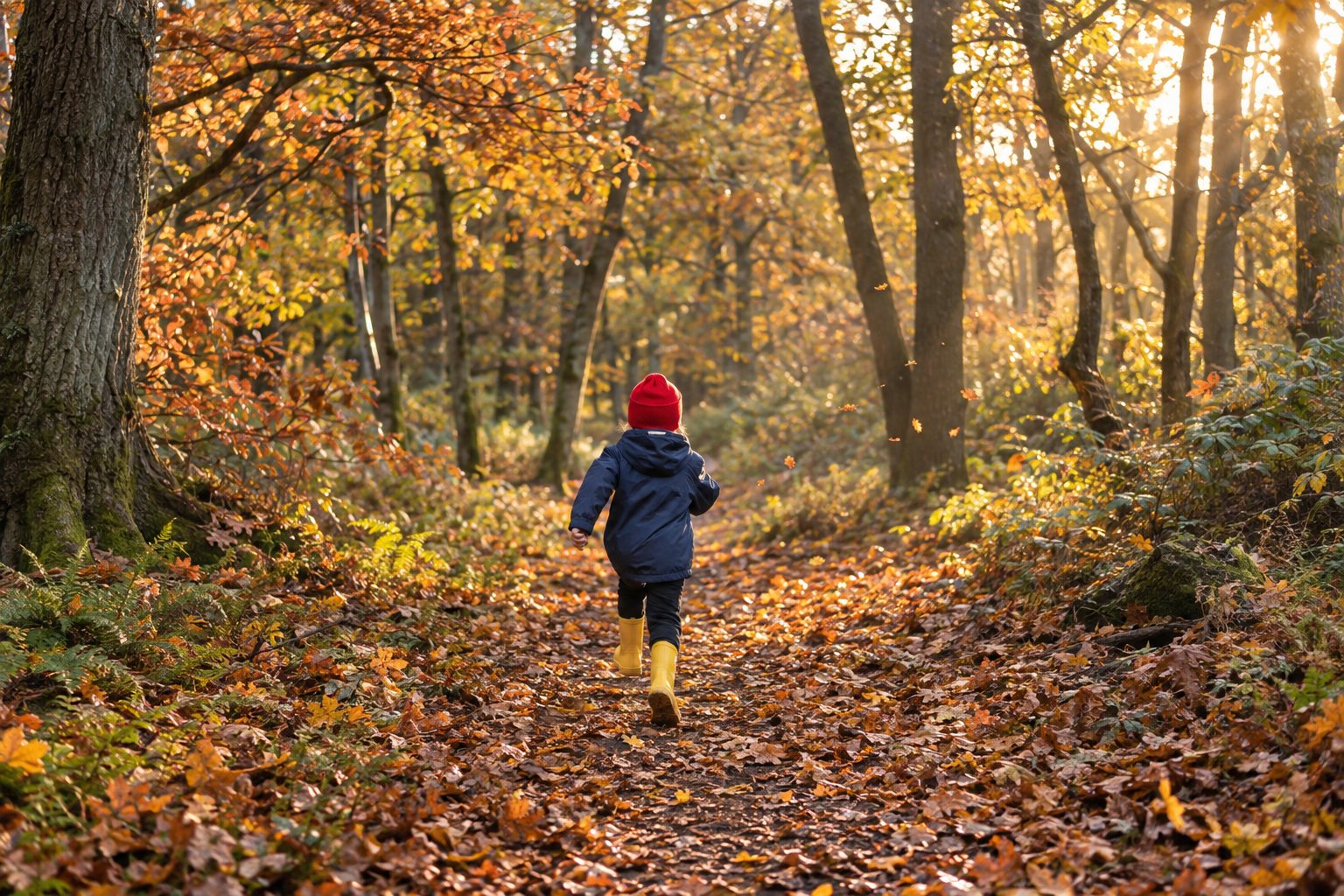
Here's the encouraging part: children still love being outside. In Natural England's 2025 survey of children aged 8 to 15, 93% agreed that "being in nature makes me very happy". The wish is there; it's the time that's gone missing.
What the research says about time outdoors
We've kept to studies we could check, and we've said what each one does and doesn't show.
Mental health. A 2019 study followed about 900,000 people in Denmark and used satellite images to measure how much green space surrounded each person's home as they grew up. Those with the least green space in childhood had up to a 55% higher risk of developing a psychiatric disorder later in life, even after accounting for other known risk factors. It shows a link, not proof that green space causes better mental health, but it's a large and careful study.
Eyesight. Short-sightedness (myopia) has become much more common in children in many parts of the world, especially East Asia. In a three-year trial in Guangzhou, China, schools that added one extra 40-minute class of outdoor activity to each school day saw fewer children become short-sighted: 30.4% of the children, against 39.5% in schools that carried on as normal. That's one of the clearest results in this field, because it was a proper randomised trial rather than a survey.
Moving. The World Health Organization recommends that children and teenagers aged 5 to 17 get at least an average of 60 minutes a day of moderate to vigorous physical activity across the week. That's much easier to reach outside than on a sofa.
A name for what's missing. In 2005, the writer Richard Louv published Last Child in the Woods and coined the phrase "nature-deficit disorder". It's worth being clear: it isn't a medical diagnosis. It's a way of describing what children may lose when they grow up with little contact with nature. The phrase stuck because so many parents recognised it.
Is screen time the enemy?
Here the evidence gets more complicated than the headlines.
In 2019, the UK's Royal College of Paediatrics and Child Health reviewed the research and concluded there wasn't enough evidence to recommend a set time limit for screens. What did worry the experts was screens pushing out the things children need, such as sleep, exercise, meals and time with family and friends. Their advice was for families to agree limits together, based on their own children. The American Academy of Pediatrics takes a similar line with its Family Media Plan, a free tool for working out rules that suit your household.
So the useful question isn't just "how many hours?" It's "what is the screen replacing, and what is it for?"
The Scout idea: technology that points outward
That question is where Scout started. Most screens are built to keep children looking at them. We wanted to build one that sends children out, and then gets out of the way.
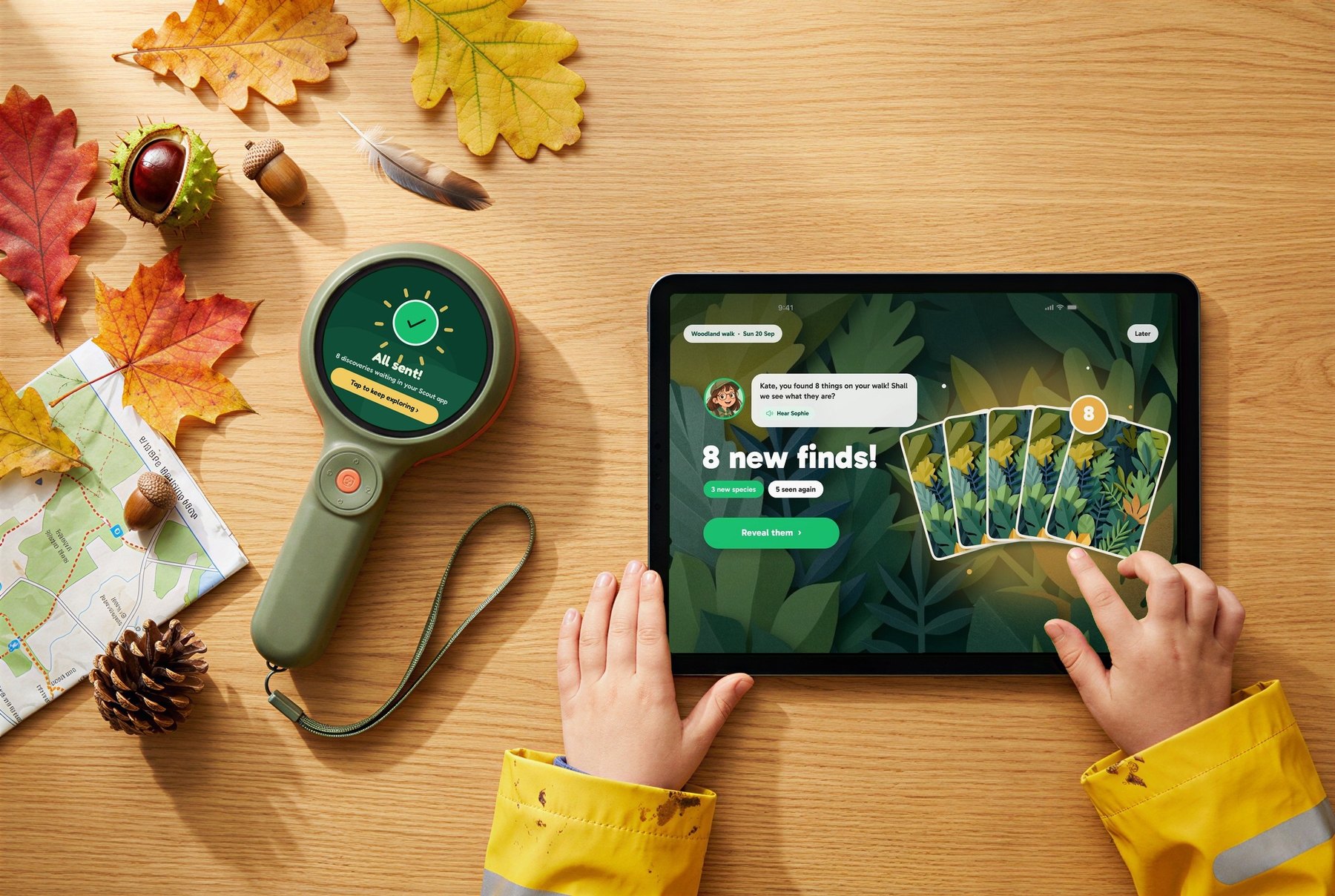
Scout is a nature camera for kids aged 9 to 13, shaped like an explorer's magnifying glass: a round screen on a grippy handle, with the orange shutter button right under the thumb, so it works with one hand. We're launching it on Kickstarter in spring 2027. Here's how it's meant to work:
- On the walk, a friendly guide character comes along. When a child points Scout at something alive, the guide names it right there, using Scout's own AI chip.
- It would rather say "I'm not sure" than tell a child something wrong. It names a group only when it's right at least 85 times in 100.
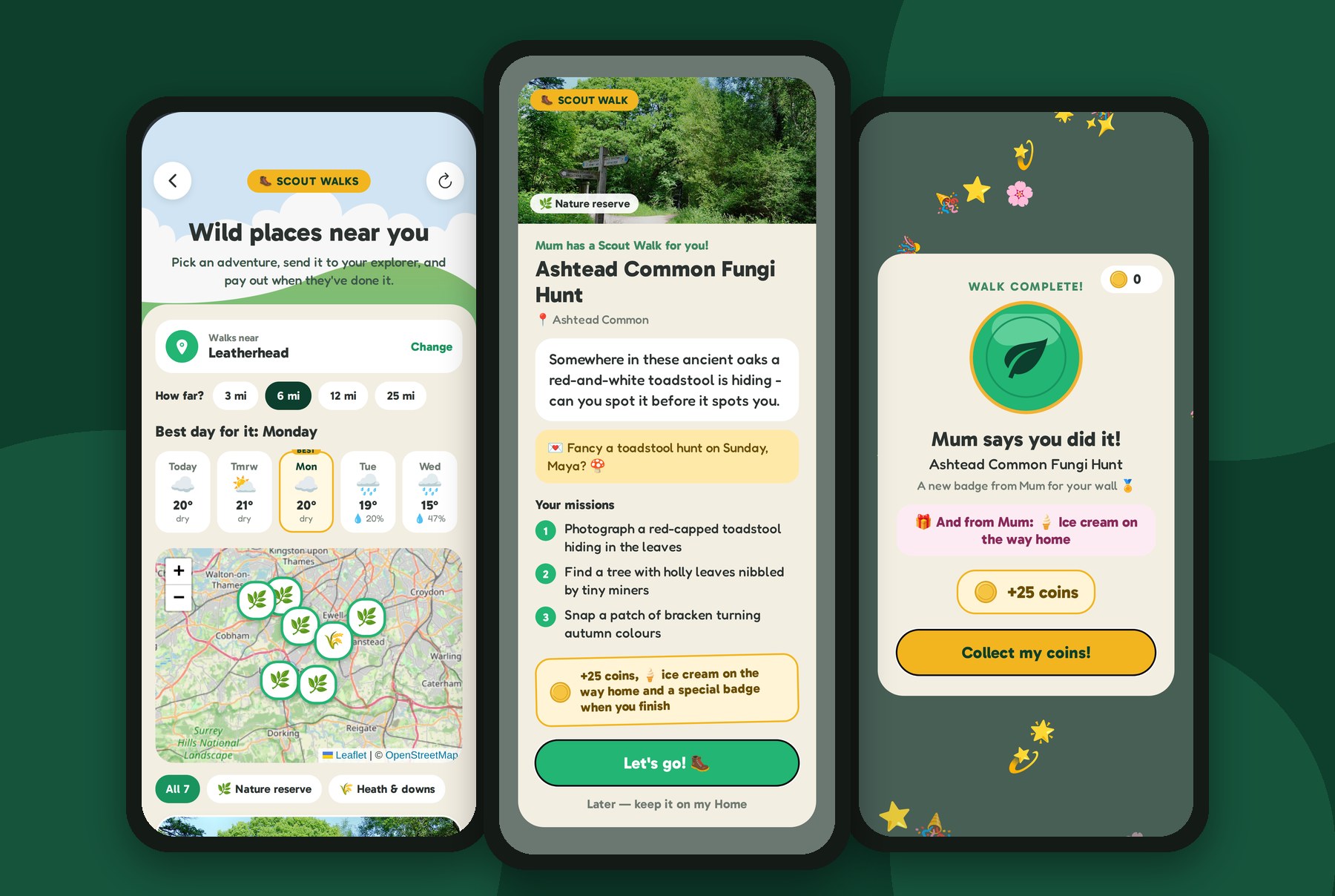
- Back home, the photos go to the free Scout app on the family's phone or tablet. Every new find becomes a Discovery Card with its name, a painted picture and facts the guide reads aloud.
- Everything grows from real walks. The collection, the nature journal, the badges, the challenges and the map of places they've explored only grow when a child goes outside and finds something.
And some things we decided it will never do:
- photos of people stay on the family's own devices; only nature photos are sent to be identified;
- no ads, and no leaderboards;
- coins are earned by exploring, never bought.
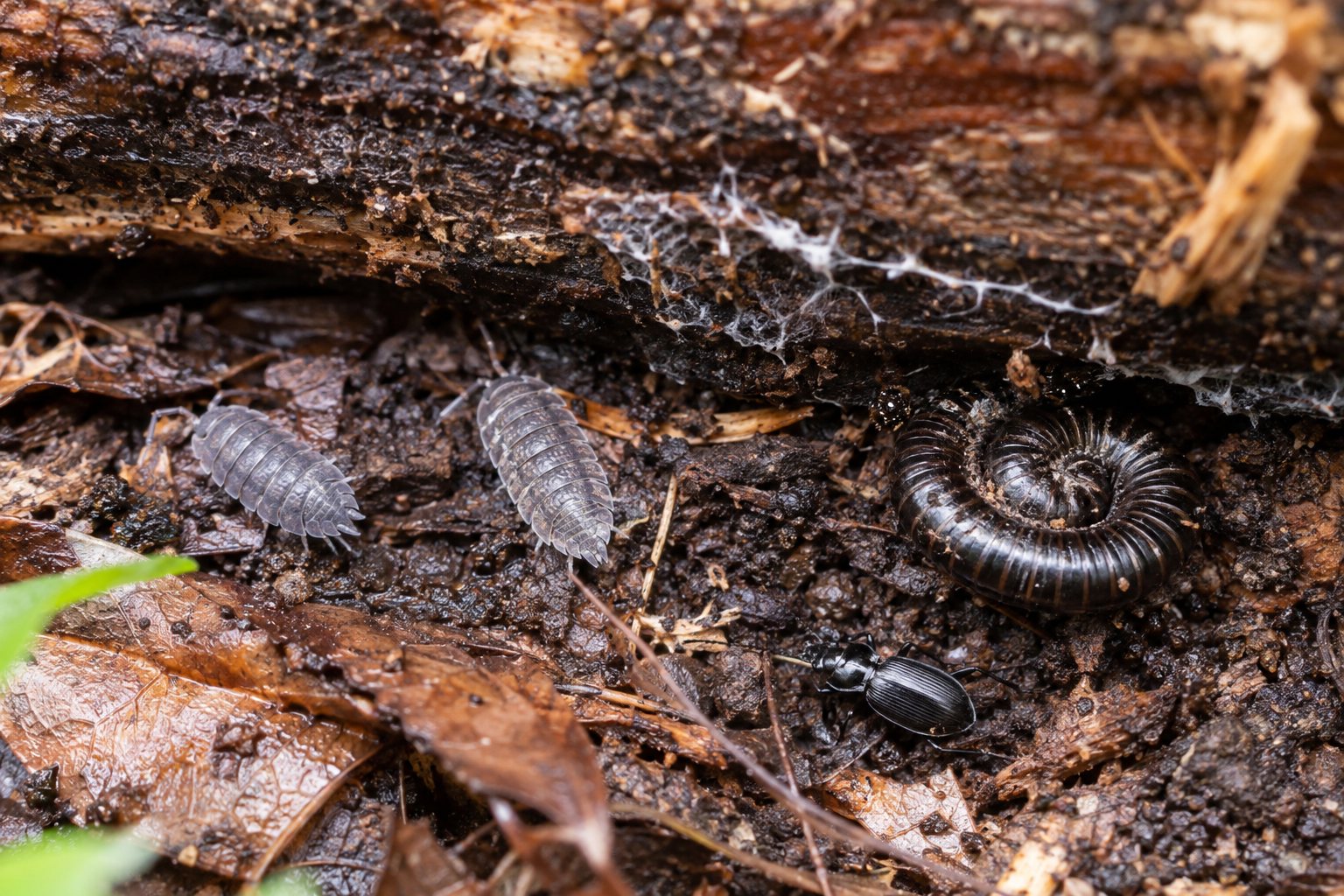
It's still a screen, and we're not pretending otherwise. Our bet is that the direction matters: a screen that makes a child look harder at a beetle is a very different thing from one that makes them forget the beetle is there.
Practical ways to find a balance
You don't need a gadget to do any of this. What seems to help most is changing the routine rather than winning an argument:
- Make the plan together. Agree the rules as a family, and write them down. Children keep rules they helped to make.
- Outside first, screens after. A walk on Saturday morning, then a film in the afternoon, feels fair to everyone.
- Protect the big three. Sleep, moving and time together are the things screens shouldn't squeeze out. Keep devices out of bedrooms at night if you can.
- Let screens serve the outdoors. Look up the bird you saw, plan tomorrow's route, or join a citizen science count. A screen used like this points outward.
- Little and often. Twenty minutes in the park after school adds up to more than one big outing a month. Walk or cycle part of the school run if you can.
- Go in any weather. A rainy-day walk or a night walk can be the most memorable of the year.
- Follow their obsession. If it's worms, go worm hunting. If it's fungi, go looking for fungi. Interest does the rest.
- Put your own phone away. Children notice what we do far more than what we say.
- Let them be bored. Boredom outside turns into den-building, stick collecting and puddle science surprisingly quickly.
Green time wins when it's easy
No family gets this perfectly right, and nobody needs to. The research doesn't say screens are poison; it says children do better with plenty of time outside, moving, noticing and being a bit muddy. Make the outside the easy option, and more often than not, they'll take it.
Sources
- TIME: U.K. kids spend less time outside than prison inmates, study says (2016)
-
Natural England: The Children's People and Nature Survey for England, 2025 update
- Engemann et al. (2019), PNAS: Residential green space in childhood is associated with lower risk of psychiatric disorders
- He et al. (2015), JAMA: Effect of time spent outdoors at school on the development of myopia (trial record)
- Preventing myopia in East Asia (2019 review, including the Guangzhou trial)
- World Health Organization 2020 guidelines on physical activity and sedentary behaviour
- Environment & Society Portal: Last Child in the Woods by Richard Louv (2005)
- RCPCH: Build screen time around family activities, not the other way round, parents told (2019)
- American Academy of Pediatrics: How to make a Family Media Plan