Bug hunt for kids: where to look, what to bring and how to tell minibeasts apart
For parents with a child who can't walk past a log without looking under it, or a child who might, given the chance. You'll get where to look, a kit list, a minibeast ID table and the kind-handling rules.
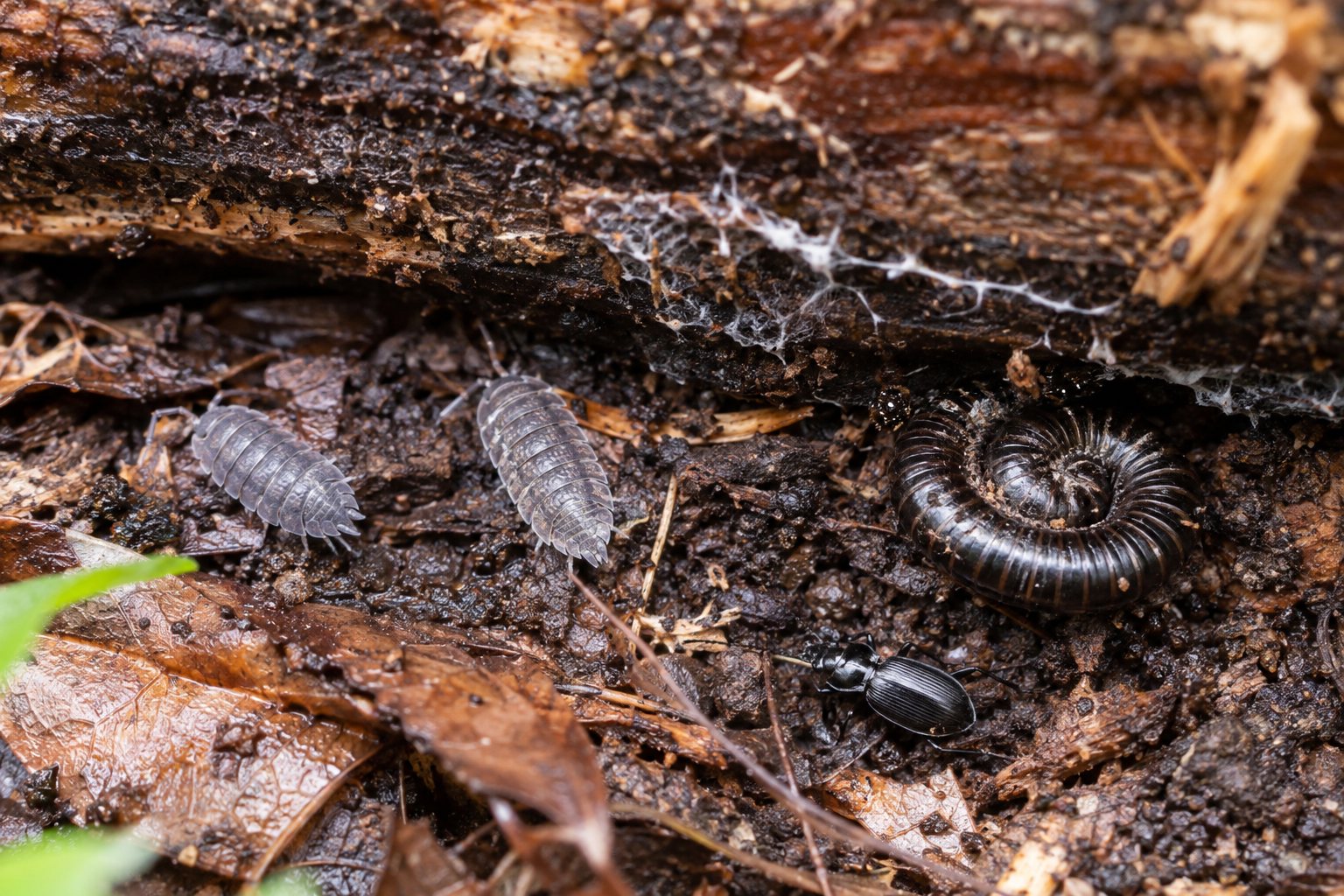
Lift a log in any park and a whole city scatters: woodlice trundling for cover, a beetle sprinting off, a centipede vanishing into a crack. For a child, it's like finding a secret door.
A bug hunt for kids needs almost no kit and works almost anywhere, from a patch of lawn to a woodland edge. This guide covers where to look, what to bring (including how to use a pooter safely), a simple table for telling minibeasts apart, and the rules for handling them kindly and putting their homes back.
Where are the best places to look for bugs?
Minibeasts like shelter, food and, for many of them, damp. Try these spots:
- Under logs and stones. The damp, dark underside is home to woodlice, millipedes, centipedes, beetles, slugs and worms.
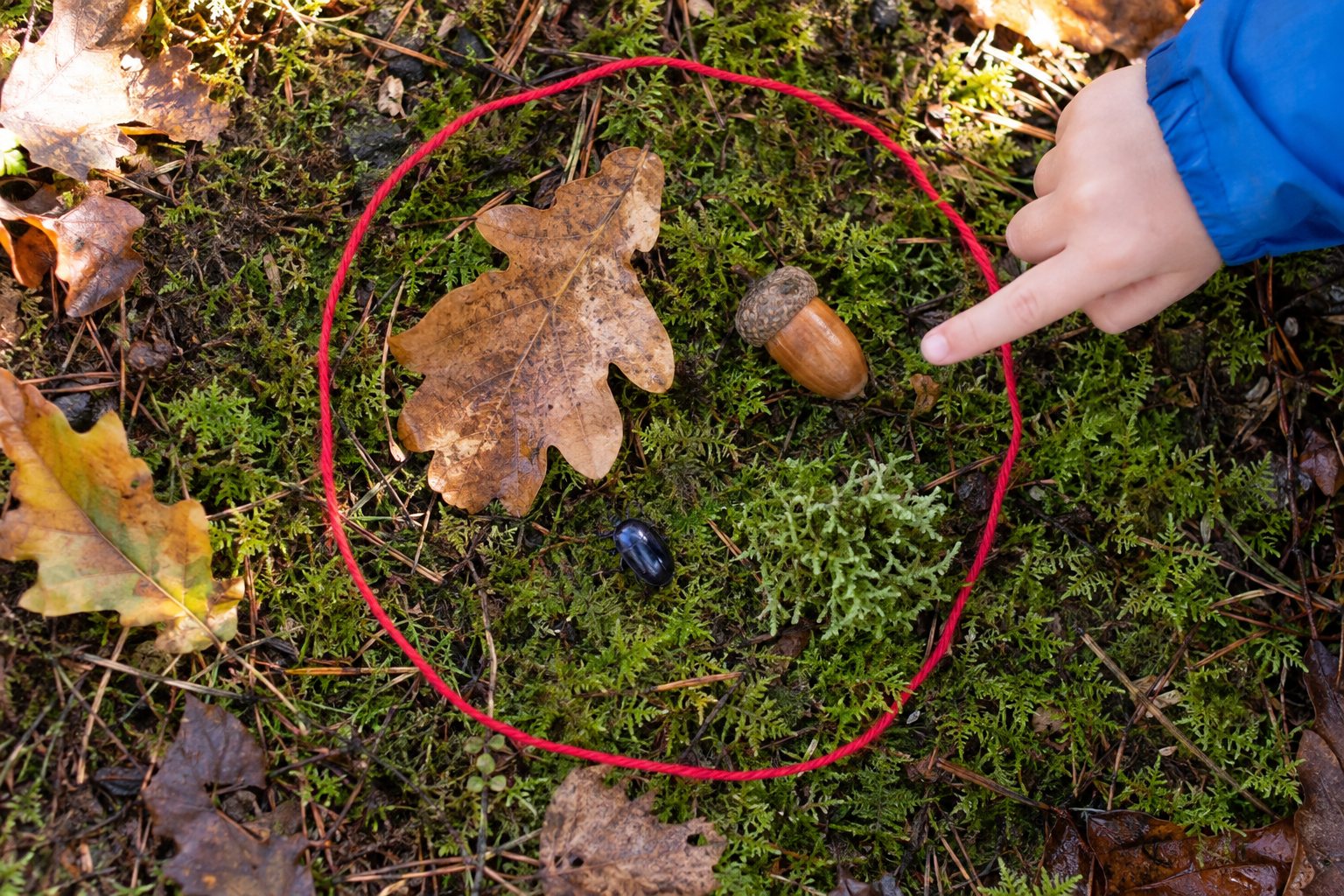
- In leaf litter. Scoop a handful of dead leaves onto a white tray or sheet and watch what crawls out.
- On flowers. Bees, hoverflies, butterflies, beetles and tiny thrips visit for nectar and pollen. Some spiders wait there too, ready to ambush them.
- On and under tree bark. Look in the cracks for spiders, beetles and other small hiders. Don't peel bark off living trees; loose bark on fallen wood is fair game, as long as you put it back.
- In long grass. Grasshoppers, crickets, spiders and caterpillars hide down among the stems.
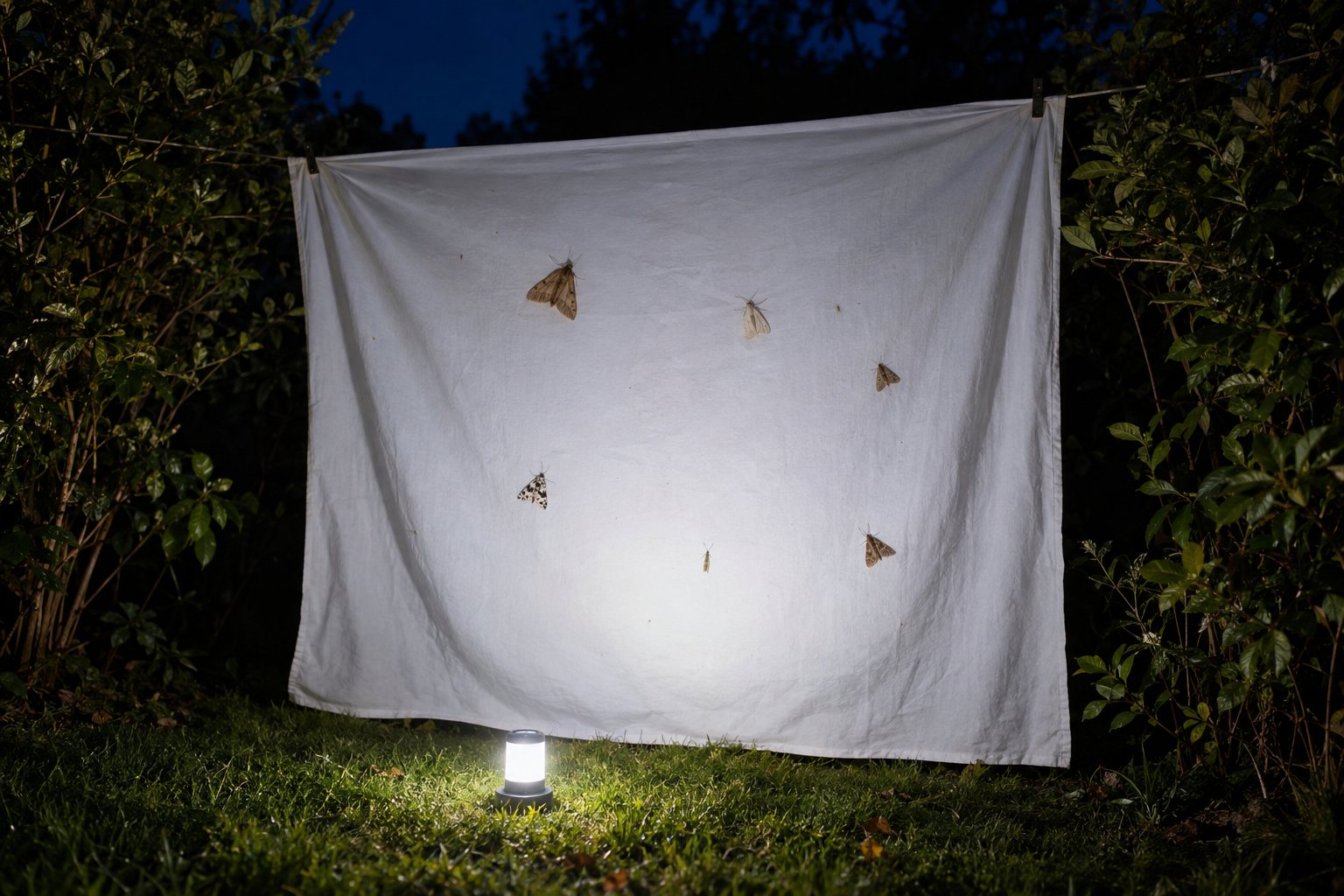
- On bushes. Hold a white sheet or an upside-down umbrella under a branch and give the branch a gentle tap. You'll be amazed what drops out.
Mild, damp days are often the best. Spring through to autumn is busiest, but the underside of a log is inhabited all year round.
What kit do you need for a bug hunt?
- Clear pots with lids. Small see-through containers, ideally with a magnifying lid, for a close look at one creature at a time.
- A soft paintbrush or a spoon. For gently moving small creatures without squashing them.
- A white sheet or tray. White makes small, dark animals easy to see.
- A sweep net. A sturdy net you sweep through long grass to see what's living in it. Sweep low and gently, then look inside quickly.
- A magnifier. A hand lens opens up a whole new level of detail.
- Gloves for lifting logs and stones.
- A pooter, if you have one (see below).
What is a pooter, and how do you use one safely?
A pooter is a clever little bug-catcher. It's a small pot with two tubes through the lid. You put one tube near an insect and suck gently on the other, and the insect is drawn up into the pot.
The safety part is a filter: a piece of fine mesh, gauze or old tights fixed over the inside end of the tube you suck on. That's what stops the bug, or grit, ever reaching your mouth. If you make your own, an adult should make the holes in the lid, and it's worth checking the filter is in place every time before you use it.
A few pooter rules:
- Suck gently, with a short breath, not a big gulp.
- Small, tough creatures only. Never pooter anything that stings or bites, like bees, wasps or ants, and never pooter anything wet, hairy, or sitting in dust or soil.
- One pooter each, so nobody shares a mouthpiece.
- Let everything go quickly, where you found it.
How do you tell minibeasts apart?
Start by counting legs and body parts. It sorts out most of what you'll find.
| Group | Legs | What to look for | Examples you might find |
|---|---|---|---|
| Insects | 6 | Three body parts (head, thorax, abdomen), antennae, often wings | Beetles, ants, bees, ladybirds, butterflies |
| Spiders | 8 | Two body parts, no antennae, can make silk | Garden spiders, jumping spiders |
| Harvestmen | 8 | One round body, very long legs, no silk, no venom | Harvestmen (in the US, often called daddy longlegs) |
| Woodlice | 14 | Grey, armoured, love damp. They're crustaceans, related to crabs and shrimps, not insects | Woodlice, including the pill woodlouse, which rolls into a ball |
| Millipedes | Lots: two pairs on most body segments | Slow, often rounded, curl up when disturbed; eat rotting plants | Black millipedes under logs |
| Centipedes | Lots: one pair on each body segment | Fast, flat, hunters, with venomous fangs at the front | Brown centipedes under stones |
| Snails and slugs | None | Glide on one muscly foot; they're molluscs | Garden snails, slugs |
| Earthworms | None | Long, soft, segmented body | Worms in damp soil |
The millipede-or-centipede question comes up on every bug hunt. The quick answer: millipedes are slow and have two pairs of legs per segment; centipedes are fast and have one. Millipedes are gentle plant-eaters. Centipedes are predators, so look with your eyes and leave them on the ground.
What will you find near you?
Some favourites on British bug hunts:
- Seven-spot ladybirds on nettles and garden plants.
- Garden spiders (the cross spider), with a white cross on their back, in webs from late summer.
- Woodlice, including the pill woodlouse, which curls into a perfect ball.
- Black garden ants marching along paths.
- Violet ground beetles, big, fast, and shining purple in the right light.
- Common earwigs under bark and in flowers.
- Brown centipedes under stones.
- Snake millipedes, long, shiny and dark, curled up under logs.
- Froghopper nymphs hiding inside blobs of "cuckoo spit" on plant stems in late spring.
Fun fact: in Britain, "daddy longlegs" usually means a crane fly, which is an insect with wings, not a harvestman at all.
How do you handle bugs kindly?
The best bug hunters leave every creature exactly as happy as they found it.
- Look first, touch last. Most minibeasts are best watched where they are.
- Use a brush or spoon rather than fingers to move something into a pot.
- One at a time, and not for long. Keep pots out of the sun, and let each creature go after a few minutes.
- Put them back where you found them, right next to their log or plant.
- Leave anything that stings or bites alone, including bees, wasps and ants.
- Don't touch hairy caterpillars. Some have hairs that can cause an itchy rash.
- Wash hands afterwards, and check for ticks if you've been in long grass.
Put the logs back
A log or stone is someone's home, and that home only works if it stays dark and damp.
- Lift it carefully, by the far edge, rolling it towards you so the log is between you and anything underneath.
- Look quickly. The creatures underneath start drying out the moment they're in the light.
- Put it back gently, the same way up and in the same spot. Lower it slowly so nobody gets squashed, and let any creatures you moved crawl back under the edge.
Happy hunting
A bug hunt is proof that you don't need to go far to find wild things. A single log can keep a curious child busy for an hour, and they'll never look at a patch of dead leaves the same way again.
We're building Scout, a nature camera for kids aged 9 to 13, shaped like an explorer's magnifying glass and worked with one thumb, launching on Kickstarter in spring 2027. When a child points it at something alive, their guide names it right there on the walk, using Scout's own AI chip, and it would rather say "I'm not sure" than guess. Back home, every new find becomes a Discovery Card in their collection, bugs included.