Rock pooling with kids: when to go, how to stay safe and what you'll find
For families heading to a rocky shore, whether it's your first rock pooling trip or your fiftieth. You'll get tide timing, the safety basics, a what-lives-here list for your coast and the rules that keep the pools healthy.
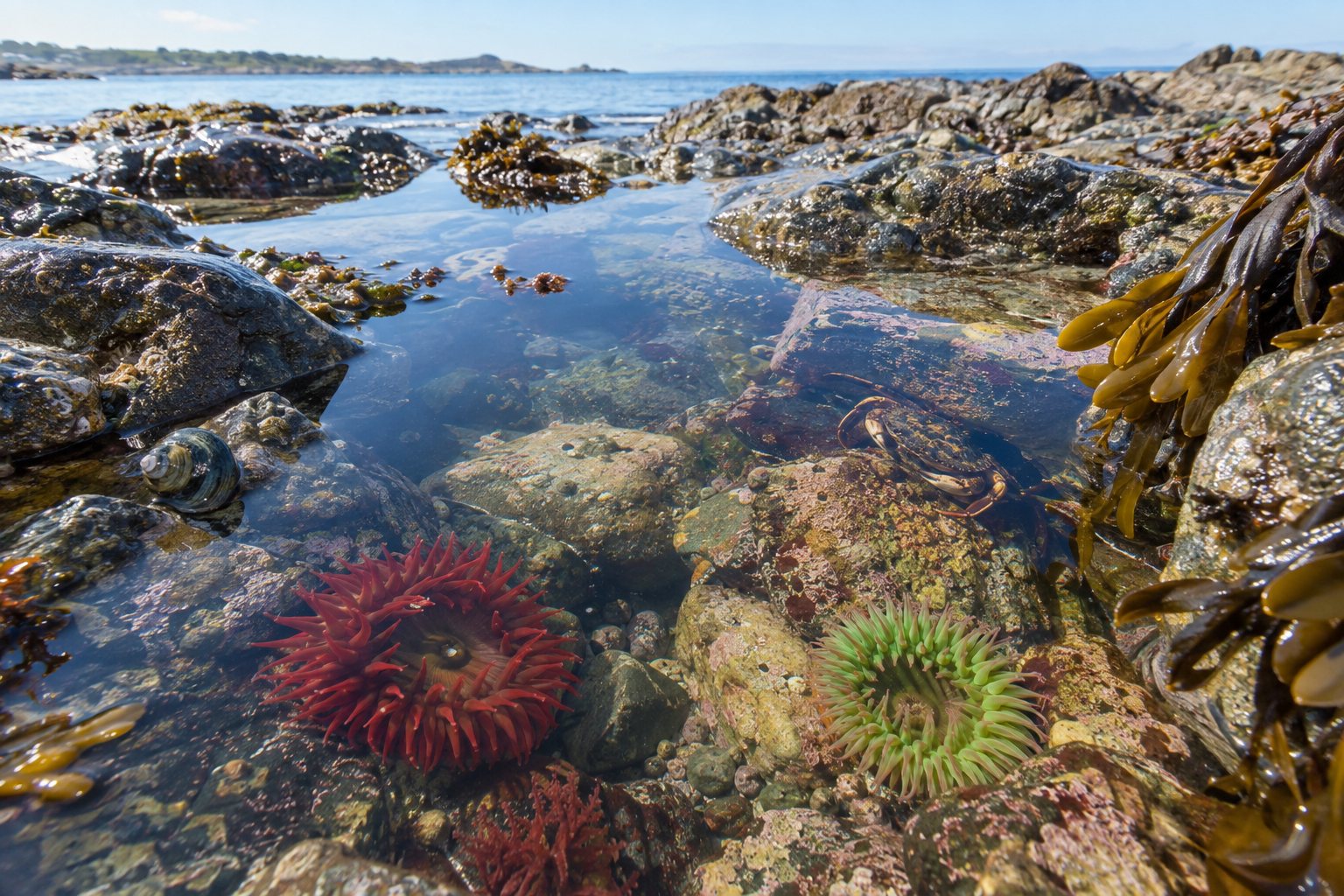
A rock pool is a whole world left behind by the sea. For a few hours at low tide, crabs, anemones, snails and tiny fish are sitting in a puddle you can crouch next to, and the sea will be back for them before long.
Rock pooling with kids is one of the best free days out there is. It takes a little planning, because the tide decides when you can go, and a little care, because rocks are slippery and the sea comes back. Here's how to time it, how to stay safe, what you might find, and how to leave every pool the way you found it.
When is the best time to go rock pooling?
Go at low tide, and get there before it. Aim to arrive an hour or so before low tide, while the tide is still going out. That way the shore gets bigger while you explore, and you're not racing the water back. Head back as the tide turns.
Spring tides are the best tides. This has nothing to do with the season. Spring tides happen around every new moon and full moon, when the sun and moon line up. They give the highest high tides and the lowest low tides, uncovering pools that are underwater the rest of the time.
Check the tide times before you go, for the exact beach you're visiting.
In the UK, the UK Hydrographic Office's free Admiralty EasyTide service gives tide times for ports around the coast, and the Met Office has tide times too. Read any local signs when you arrive: they'll tell you about spots that get cut off.
How do you stay safe on the shore?
The shore is safe when you respect it. These are the big ones:
- Watch the tide the whole time. It can come in faster than you expect and cut you off on a rock, a sandbar or around a headland. An adult should keep an eye on the water and a clock, and turn everyone back early.
- Walk, don't run. Seaweed-covered rocks are as slippery as ice. Walk slowly, and use your hands on the rocks when it's steep.
- Wear shoes with grip. Old trainers or water shoes are better than flip-flops or bare feet, and they protect toes from barnacles.
- Keep an eye on the waves. Stay back from the edge of the sea, and never turn your back on the waves near the water.
-
Stay together, and let someone at home know where you've gone.
-
In an emergency, call 999 or 112 and ask for the Coastguard.
Weever fish, a summer warning. On sandy beaches in summer, small weever fish bury themselves in the shallows with only their venomous back spines poking out, and treading on one really hurts. Wear beach shoes when paddling. If someone is stung, find a lifeguard if there is one; the NHS advice is to put the foot in water as hot as the person can comfortably bear (not scalding) for at least 30 minutes, and to get medical help if the pain is severe or doesn't settle.
What do you need?
Not much:
- A clear or white bucket or tub, filled with seawater, for a short, careful look at one creature.
- A magnifier.
- A spotter guide for your coast, or the list below.
- A towel and a change of socks. Someone always gets a wet foot.
Hands and eyes do most of the work. Sit still next to a pool for a minute and it comes alive: shells walk, weed wriggles, and a crab you didn't see steps out from under a ledge.
What will you find in a rock pool?
On British coasts
- Shore crabs. The crab you'll meet most. If you pick one up, hold it gently from behind, by the back edges of its shell, so the claws can't reach you.
- Beadlet anemones. Out of the water they look like blobs of red jelly. Underwater they open into a ring of tentacles.
- Periwinkles. Small snails with rounded shells, grazing on rocks and seaweed.
- Limpets. Cone-shaped shells clamped tight to the rocks. When the tide is in they move about to graze, then go back to exactly the same spot.
- Blennies and shannies. Small fish with big lips and cheeky faces, hiding in cracks.
- Starfish. Look under ledges and seaweed, especially in the lower pools.
- Prawns. Almost see-through, and they shoot backwards with a flick of the tail when they're startled.
The golden rules of rock pooling
These keep the pools healthy for the animals, and for the next family.
- Turn rocks back the right way up. Anything living underneath needs the shade and damp. Put rocks back gently, exactly where they were.
- Don't pull limpets or anemones off the rocks. They can be damaged and may not survive. The same goes for seaweed, which can't reattach.
- One creature, one bucket, one short look. Keep the bucket in the shade with fresh seawater, and don't keep anything long.
- Put animals back where you found them, gently and close to the water, not dropped from a height.
- Take photos, not animals. Nothing comes home except memories and pictures.
Off you go
Pick a low tide, check the times, pack shoes with grip, and let the kids lead the way from pool to pool. The best finds usually come to whoever sits still the longest.
If you'd like to know what we're up to: we're building Scout, a nature camera for kids aged 9 to 13, shaped like an explorer's magnifying glass and worked with one thumb, launching on Kickstarter in spring 2027. When a child points it at something alive, their guide names it right there on the walk, using Scout's own AI chip, and back home every new find becomes a Discovery Card in their collection. It's made for days like this, where the only thing you take home is a picture.