The Countryside Code for kids: turning the rules into habits for every walk
For parents who want their 9 to 13-year-old to know how to behave outdoors without it feeling like a list of rules. You'll get the official version, the reasons behind it and a pocket version kids can remember.
Every family walk comes with an unwritten deal: we get to enjoy the place, and we leave it as good as we found it. The Countryside Code for kids is that deal written down.
The trouble is that a list of rules is easy to forget and easy to ignore. A habit with a reason behind it sticks. So this guide gives you the official version first, then turns it into a handful of habits a 9-year-old can remember and, better still, explain to a younger cousin.
What is the Countryside Code?
The Countryside Code is the official advice for enjoying the outdoors in England and Wales. It began life as the Country Code in 1951, and was refreshed in 2021 with a friendlier tone and some new advice, like saying hello to other people. It covers parks, waterways and the coast as well as the countryside. It has three headings:
Respect everyone
- be considerate to those living in, working in and enjoying the countryside
- leave gates and property as you find them
- do not block access to gateways or driveways when parking
- be nice, say hello, share the space
- follow local signs and keep to marked paths unless wider access is available
Protect the environment
- take your litter home – leave no trace of your visit
- do not light fires and only have BBQs where signs say you can
- always keep dogs under control and in sight
- dog poo – bag it and bin it – any public waste bin will do
- care for nature – do not cause damage or disturbance
Enjoy the outdoors
- check your route and local conditions
- plan your adventure – know what to expect and what you can do
- enjoy your visit, have fun, make a memory
In Scotland, the Scottish Outdoor Access Code applies instead. It gives everyone a right of responsible access to most land and water, and it rests on three principles: respect the interests of other people, care for the environment, and take responsibility for your own actions.
Turning the rules into habits
Here are the habits we'd teach, each with the reason in one line. Children follow rules they understand.
| The habit | Why it matters |
|---|---|
| Leave what you find | Feathers, cones, shells and stones are food, shelter or building material for something, and the next family deserves to find them too. |
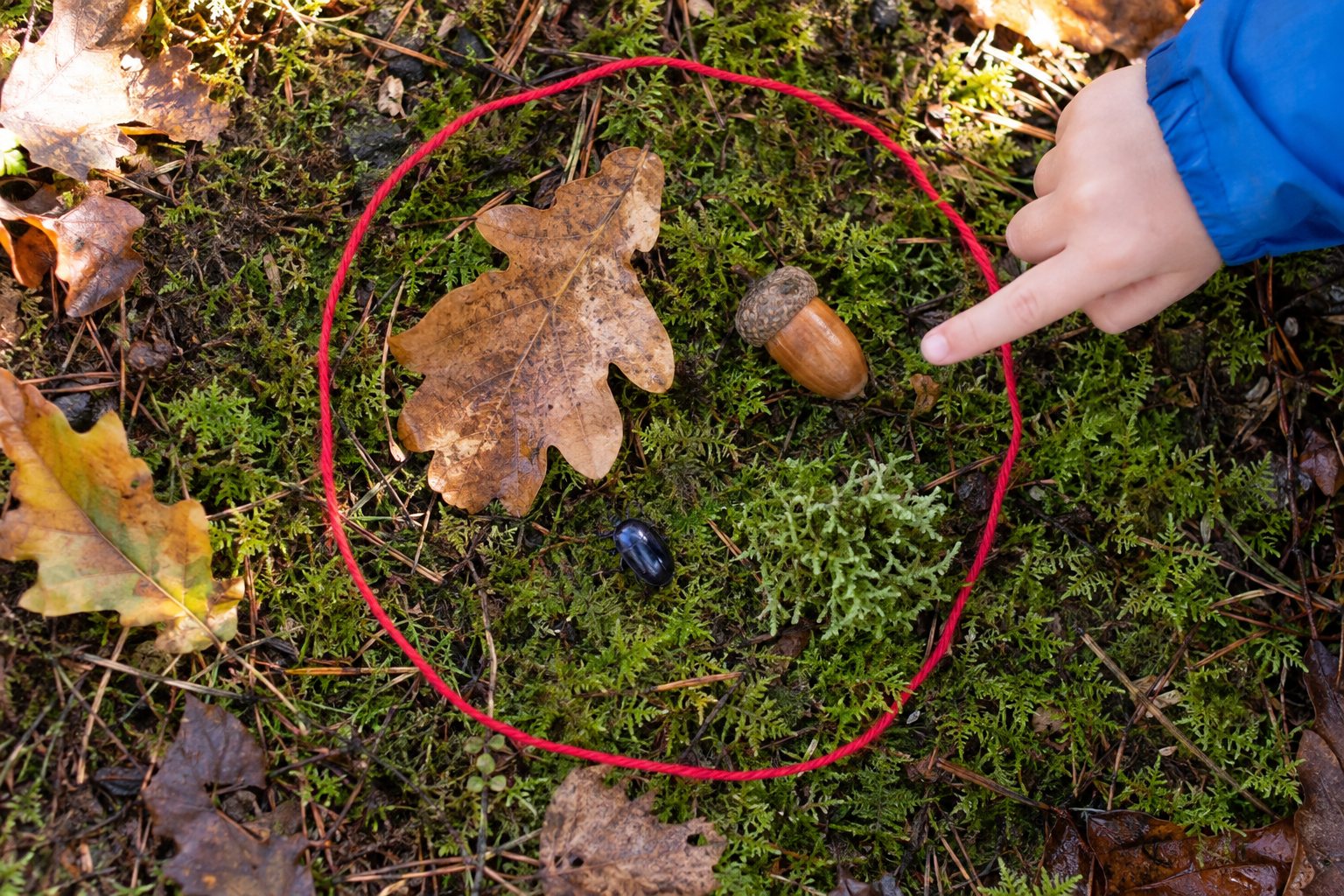
| Take photos, not specimens | A photo keeps the memory and leaves the flower to feed insects and make seeds. Picking some wild plants is against the law. |
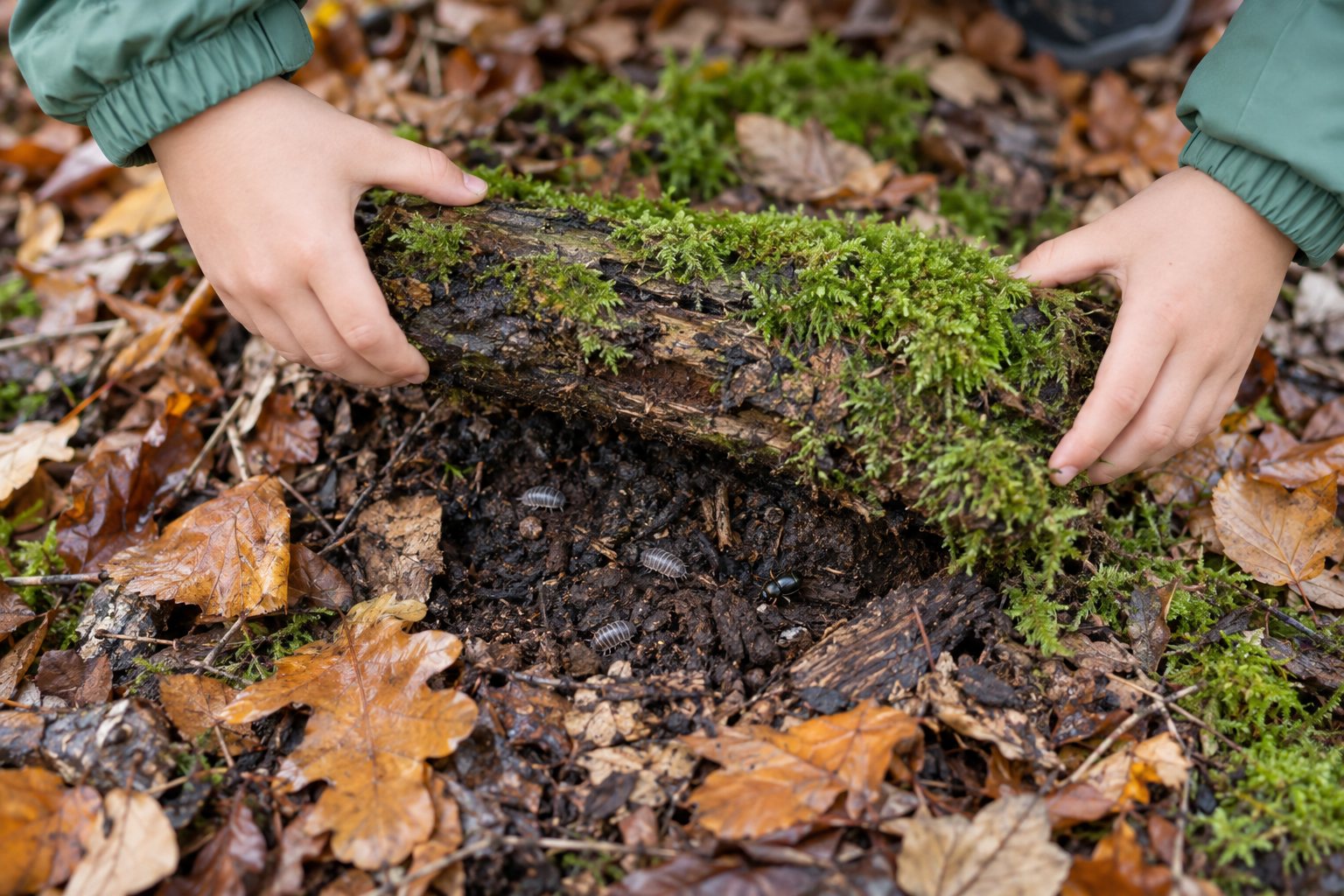
| Put logs and stones back the way they were | The underside of a log is someone's home. Put it back and the home is still there tomorrow. |
| Stick to the path | Every step off it crushes plants, and paths that get trampled at the edges grow wider and wider. |
| Leave gates as you find them | An open gate may be letting animals reach water; a closed one is keeping them safe. Never guess. |
| Take all your litter home | Wrappers can trap and choke animals. Peel and apple cores don't belong there either. |
| Watch wildlife from a distance | If an animal stops what it's doing to look at you, you're too close. Never feed wild animals. |
| Say hello and share the space | Step aside on narrow paths and keep the noise down, so everyone can hear the birds. |
The log-lifting habit, step by step
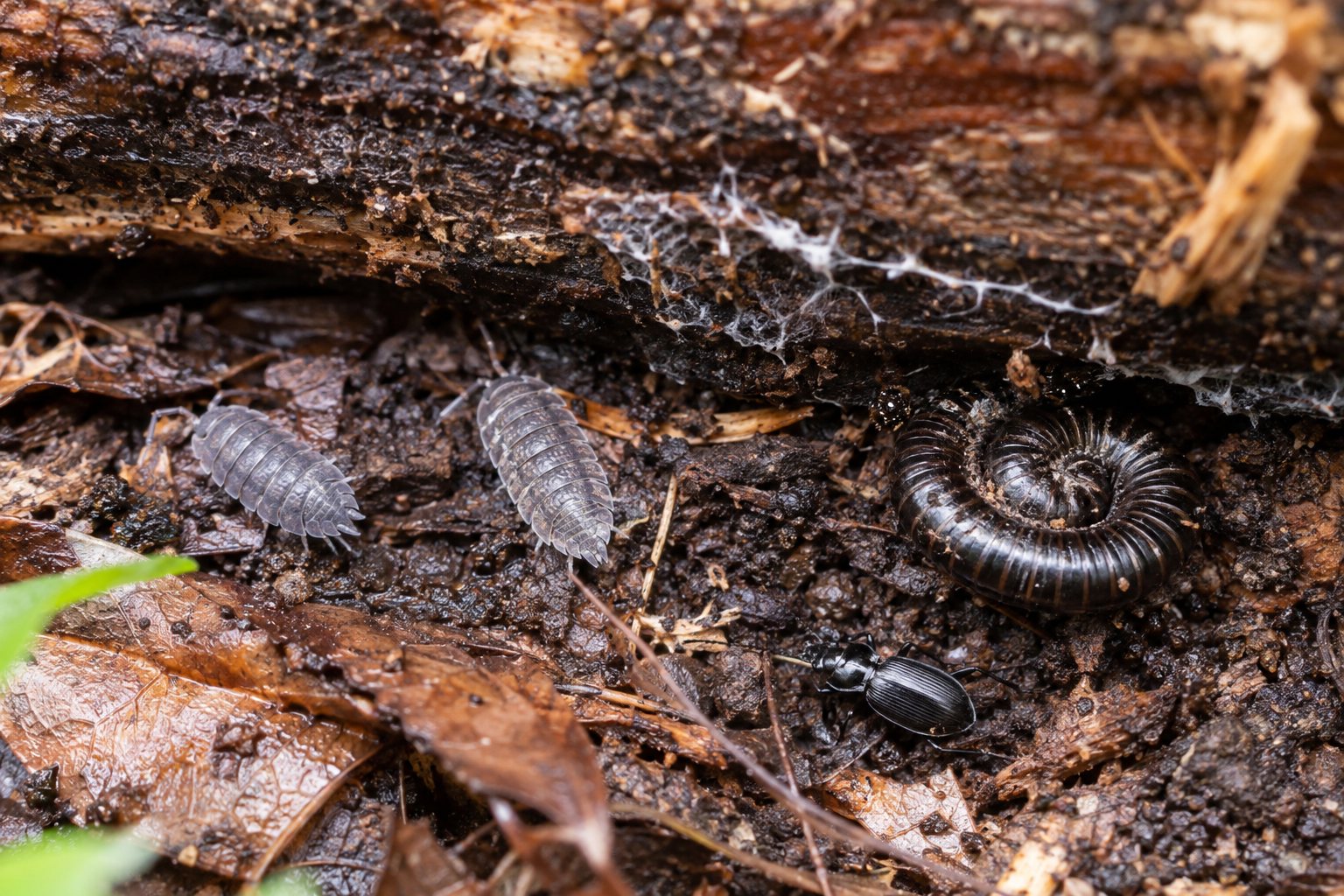
Lifting a log is one of the best bits of any walk. Underneath you might find woodlice, beetles, centipedes, slugs, worms and, if you're lucky, a toad or a newt. It only stays that way if everyone does it gently:
- A grown-up lifts anything big or heavy. Keep fingers and toes out from underneath.
- Roll it towards you, so the log is between you and whatever's under it.
- Look, count, photograph. Don't pick animals up; they're easily hurt and dry out quickly.
- Put it back slowly, exactly as it was, in the same hollow and the same way up.
- If anything walked out, put it down next to the log, not in front of it, so it can crawl back underneath without being squashed.
Paths, mud and puddles
It's tempting to step round a muddy patch. But when everyone does that, the path gets wider and the plants at its edges get flattened. The better habit: wear boots you don't mind getting muddy and walk straight through the middle, in single file. It's also a lot more fun.
Dogs
Dogs love a walk as much as children do, and most of the trouble outdoors is about dogs that aren't under control.
- Keep your dog under control and in sight, and on a lead around sheep, cows and horses.
- On open access land, dogs must be on a lead no longer than 2 metres from 1 March to 31 July, to protect ground-nesting birds, and at any time of year around farm animals.
- Bag it and bin it. Any public waste bin will do.
- If cattle or horses chase you and your dog, the Code's advice is to let the dog off the lead. Don't risk getting hurt trying to protect it.
A pocket version for kids
Write this on a card and keep it in a coat pocket:
- Look, don't take. Photos are the souvenir.
- Put it back the way it was.
- Stay on the path, even through the mud.
- Gates: leave them how you found them.
- Litter goes home with us.
- Animals: watch from far away, never feed.
- Say hello.
Taking it further
"Take photos, not specimens" is the habit Scout was designed around. Scout is a nature camera for kids aged 9 to 13, shaped like an explorer's magnifying glass and worked with one thumb, launching on Kickstarter in spring 2027: every new find becomes a Discovery Card in the free Scout app, so the collection grows while the woods stay exactly as they were. And the coins in it are earned by exploring, never bought.
Leave it better
The best outdoor habits aren't really about rules at all. They're about noticing that a place belongs to lots of other creatures and people, and wanting it to be just as good next time. If your child finishes a walk by putting a log back gently, without being asked, the code has done its job.