What to look for in nature each month: a year of wildlife, January to December
For families who want a reason to get outside every month of the year. You'll get two to four things to look for each month, with separate notes for the UK and the US where they differ.
Nature runs on a calendar, and once you know it, every month has something to look forward to. This guide shows what to look for in nature each month, from January's first catkins to December's winter birds, with two to four highlights per month and separate notes for the UK and the US where they differ.
One important thing first: timings are a guide, not a timetable. They shift with where you live and with the weather. Spring arrives earlier in the south than the north, and a mild winter or a cold snap can move things by weeks. If something's late, keep looking. Noticing when things happen where you live is real science.
How to use this calendar
- Pick one thing a month and make it a mission. One good sighting beats a rushed list.
- Go at the right time of day. Dawn is best for birdsong, dusk for bats and foxes, and warm summer nights for glowing insects.
- Look twice in the same place. A pond, a hedge or a single tree visited every month shows the whole year changing.
- Leave things as you found them. Look, draw and photograph, but leave spawn, nests and flowers where they are.
January: bare branches and night-time calls
- Hazel catkins, the dangly yellow "lambs' tails", start to open on bare twigs.
- Snowdrops push up from late January.
- Foxes screaming at night. The eerie sound is usually a female fox calling in the breeding season.
- The RSPB's Big Garden Birdwatch usually runs over the last weekend of the month.
February: the first stirrings
- Frogspawn. The first clumps can appear in January in the southwest, but February and March are the main months in most places. Look, and leave it in its pond.
- Birdsong gets louder as robins, blackbirds and great tits start singing for territories.
- Snowdrops are at their best.
March: spring gets moving
- Chiffchaffs arrive from early March, singing their own name: "chiff-chaff-chiff-chaff".
- Bumblebee queens wake from winter and zigzag low over the ground looking for a nest site.
- Primroses and blackthorn blossom brighten banks and hedges.
- Toads walk to their breeding ponds on mild, damp evenings.
April: flowers and first migrants
-
Tadpoles wriggle in ponds. Visit the same pond every week or two and watch their back legs appear.
-
Bluebells carpet woods from mid-April into May, earlier in the south. Stick to paths: bluebell leaves are easily crushed.
- Swallows are back from Africa, swooping low over fields.
- Orange-tip butterflies appear. The males have bright orange wingtips.
May: the dawn chorus peaks
-
The dawn chorus is at its loudest. International Dawn Chorus Day is the first Sunday in May: set an alarm and listen.
-
Swifts scream over rooftops. Most arrive in May from Africa.
- Hawthorn blossom (the "May" tree) turns hedges white.
June: long evenings
-
Bats come out at dusk to hunt insects. Warm, still evenings near water are best.
-
Glow-worms, which are actually beetles, glow green in grassland on warm June and July nights.
- Fledglings everywhere: fluffy young birds with short tails. If one's hopping about, its parents are usually nearby.
- Elderflower froths white in hedges.
July: butterflies and buzzing
-
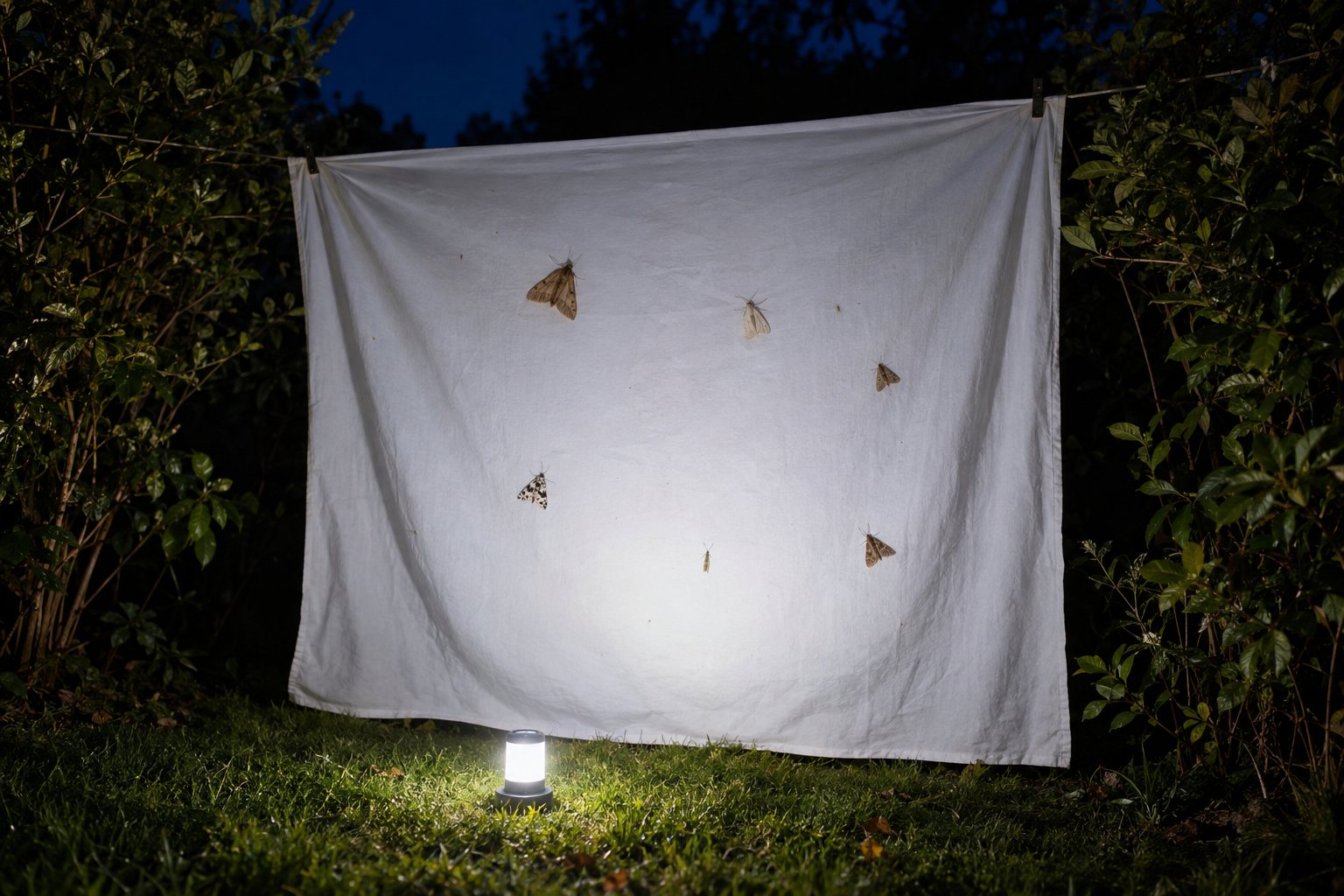
Moths. Leave an outside light on for an hour after dark and see who visits. Moths come in amazing shapes and colours, and many are only seen at night.
-
Butterflies are at their peak. The Big Butterfly Count usually runs from mid-July to early August.
- Flying ant day: on warm, humid days winged ants pour out of nests all at once.
- Rock pools are at their best on low tides in the summer holidays.
August: shooting stars and late summer
-
The Perseid meteor shower peaks around 12 to 13 August. Lie back somewhere dark after sunset.
-
Swifts start leaving for Africa from late July, and most are gone by early September.
- Blackberries ripen along paths. A grown-up should check before anyone eats one.
September: webs and migration
-
Spider webs are everywhere on dewy mornings. Big orb-weavers spin wheel-shaped webs across paths.
-
Conkers fall from horse chestnut trees, peaking in late September and early October.
- Swallows gather on wires before flying south.
October: autumn colours and fungi
-
Fungi pop up in woods and on lawns. Look, photograph and draw, but never touch or taste wild mushrooms.
-
Redwings and fieldfares arrive from Scandinavia to feast on berries.
- Red deer rut. Stags roar in parks and on hills. Watch from a long way off.
November: flocks on the move
- Starling murmurations. From November, huge flocks swirl over reedbeds and piers at dusk before roosting.
- Fieldfares and redwings strip berries from hedges.
- Leaf fall. Bare trees reveal old birds' nests you never saw in summer. Look, but leave them be.
December: winter birds and the longest night
- Feeders are busiest in cold snaps. Our winter garden birds guide shows who to look for.
-
The winter solstice, around 21 December, is the longest night of the year. Go out after dark and listen.
-
Robins sing all winter, both males and females, each defending a winter feeding patch.
- Holly and ivy berries feed thrushes and blackbirds.
Make your own nature calendar
Keep a simple "firsts" list on the fridge: the first frogspawn, the first swift, the first frost. Next year, compare the dates. Scientists call this phenology, the study of when things happen in nature, and records sent in by ordinary families help them see how the seasons are changing. You can add yours to the Woodland Trust's Nature's Calendar. Twelve months from now, you'll have a calendar that's truly your own.
Sources
- Woodland Trust: When do frogs spawn?, When do bluebells flower?, When are conkers ready? and Glow-worm
- Natural History Museum: The secret life of urban foxes
- BTO: Chiffchaff, Swift, Redwing and Fieldfare
- RSPB: Big Garden Birdwatch and Starling murmurations
- Butterfly Conservation: Big Butterfly Count
- The Wildlife Trusts: Dawn Chorus Day
- Royal Museums Greenwich: Perseid meteor shower guide
- Hawk Mountain Sanctuary: Great horned owl and Broad-winged hawk
- Penn State Extension: The science behind sap flow in maple sugaring
- Great Backyard Bird Count: birdcount.org
- University of Maine Extension: Spring peeper fact sheet and NC Wildlife: Spring peeper
- Mass Audubon: Big Night: amphibian migrations
- Visit Quad Cities: Bald eagle watching
- Nebraska Game and Parks: Sandhill cranes
- Audubon: When to expect hummingbirds this spring
- Mass.gov: Why it's normal to find fawns alone
- AccuWeather: Firefly season
- USDA Forest Service: Monarch butterfly migration
- Cornell Lab of Ornithology, All About Birds: Dark-eyed junco
- Audubon: Christmas Bird Count
- Woodland Trust: Nature's Calendar
- USA National Phenology Network: Nature's Notebook