Signs of spring for kids: 13 things to find, and how to record the first ones
For families who want a reason to get out in late winter. You'll get thirteen signs of spring to spot where you live, and a simple way to record the date you first see each one.
Late winter can feel like it will never end. Then one day there's a flash of yellow in a hedge, or a sound from the pond that wasn't there last week, and you realize spring has already started without telling anyone.
Hunting for signs of spring is one of the best things to do with kids at this time of year. It turns an ordinary walk into a search, it works in a park or a backyard as well as in the countryside, and it comes with a bonus: if you write down the date you first see each sign, you're doing real science. Here are thirteen signs to look for, and how to keep a record that counts.
What is phenology?
Phenology is the study of when things happen in nature: the first frogspawn, the first leaf on a tree, the first swallow of the year. People have been writing these dates down for centuries. In England, a man called Robert Marsham started recording his "Indications of Spring" in 1736.
Why does it matter? Because the dates change. Comparing thousands of records across many years helps scientists see how spring is shifting as the climate warms. Your family's notebook can be part of that.
Signs of spring to look for
Spring doesn't arrive everywhere on the same day. It can reach a sheltered southern valley weeks before a hilltop further north, so treat the months below as rough guides, not rules.
These signs fit much of the eastern and central US. If you live out West or in the far South, your list will look different, and working out your own local signs is half the fun.
- Skunk cabbage. One of the very first plants to flower, poking up in wet woods and swamps as early as February. It makes its own heat and can even melt the snow around it. Look and sniff from a distance; don't touch or taste it.
- Maple sap running. When nights are below freezing and days are above it, sap starts flowing in maple trees. Look for buckets or tubing on trees, or a sugarhouse with steam pouring out. It takes around 40 gallons of sap to make one gallon of syrup.
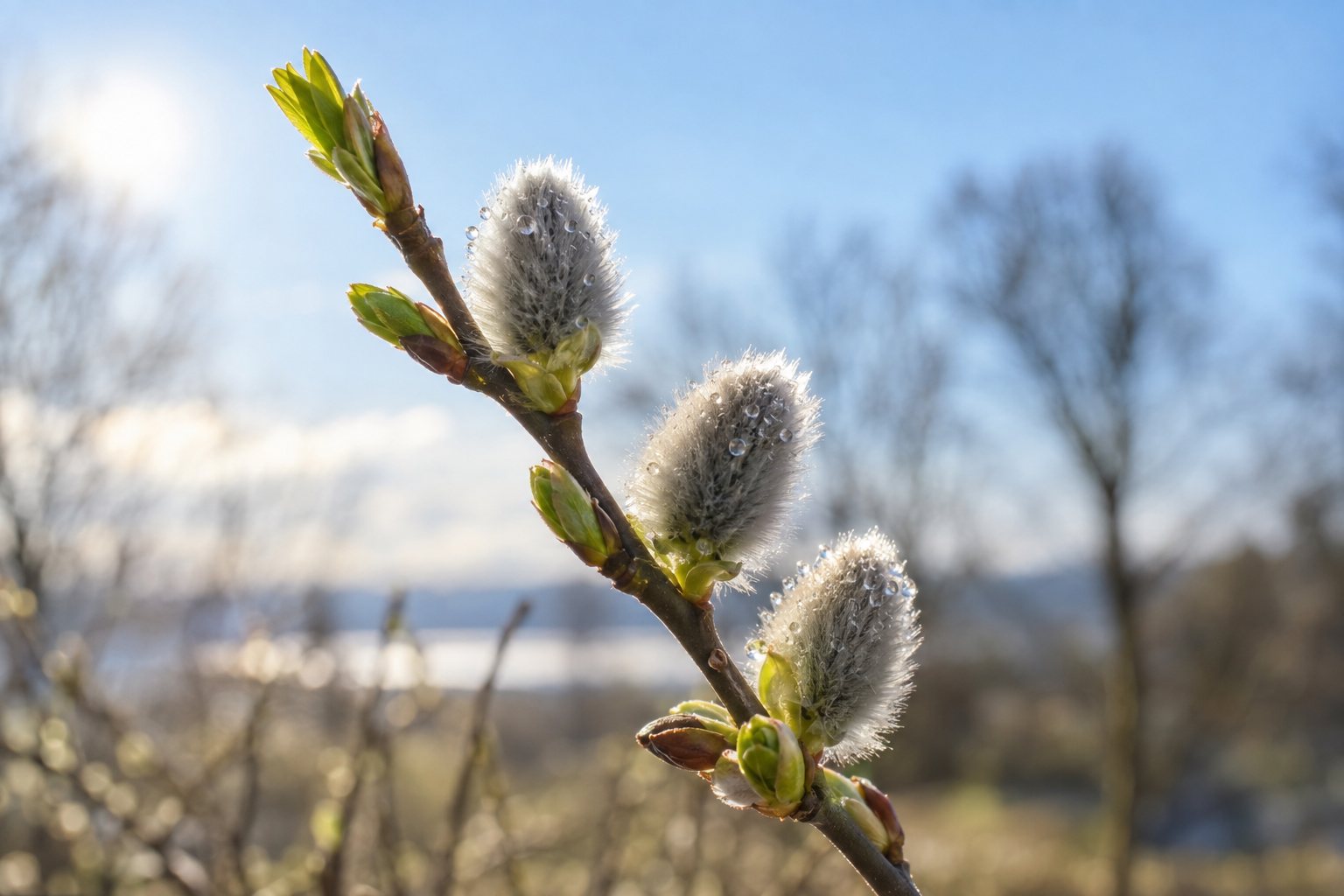
- Pussy willow. Soft, silvery, furry buds on bare willow twigs in late winter.
- Red-winged blackbirds. The males come back to marshes first and sing "conk-la-ree!" from the tops of cattails, flashing their red and yellow shoulder patches.
- American robins on the lawn. Many robins never really left, but in early spring they come out onto lawns to tug up worms and start claiming territories.
- Spring peepers. Tiny frogs, about an inch long, whose "peep, peep, peep" chorus fills wetlands on mild, rainy evenings in late winter and early spring.
- Wood frogs. One of the earliest frogs to breed. Listen near woodland pools for a call that sounds surprisingly like ducks quacking.
- Crocuses. Purple, white and yellow cups in yards and parks, often visited by the first bees.
- Red maple flowers. Tiny red flowers open before the leaves, so whole treetops look faintly red.
- A mourning cloak butterfly. Dark wings with pale yellow edges. Mourning cloaks spend the winter as adults, so they can be the first butterfly you see on a warm day.
- Bumblebee queens. Big bumblebees flying low and slow over the ground, looking for food and a place to start a nest.
- Forsythia. Shrubs in yards and parks suddenly covered in bright yellow flowers, before their leaves.
- Forest-floor wildflowers. Before the trees leaf out, look for bloodroot, trout lilies and spring beauties catching the sun on the woodland floor.
How to keep a first-sightings record
The most useful thing isn't seeing a sign. It's writing down when you first saw it. Here's a simple way to do it.
- Pick a patch. Choose somewhere you pass at least twice a week: your yard, the park on the way to school, a hedge you walk past.
- Choose a few signs from the list above. Five is plenty to start.
- Look properly each time you go by. Stopping for thirty seconds counts.
- Write it down the first time you see each one, in a notebook or on a sheet stuck to the fridge.
| Sign | Date first seen | Where | Weather |
|---|---|---|---|
| Spring peepers calling | |||
| Mourning cloak butterfly | |||
| Bumblebee queen |
Keep the notebook, and next year you can compare. Was spring early or late? Kids love finding out that their own records can answer a real question.
Share your records with scientists
Nature's Notebook, run by the USA National Phenology Network, collects records from volunteers across the country. It works a little differently from a first-sightings list: you choose a plant or animal near you and check it regularly, noting what you see each time (are the flowers open yet? are the leaves out?). That shows scientists not just when spring starts, but how it unfolds.
For first sightings of arrivals like American robins, monarchs and hummingbirds, Journey North collects reports from families and schools and maps them as spring moves north.
A few rules for spring explorers
- Look, don't pick. Leave flowers for the bees and the next walker.
- Leave spawn in the pond. It's much safer where it is.
- Stay on paths in woods, especially where plants are coming up.
- Wash hands after pond-side exploring.
- Check for ticks after walking through long grass, as the weather warms up.
Go and find spring
You don't need a special trip. Spring is happening in hedges, ponds, lawns and treetops everywhere, and a child who's looking for it will find it first.
That's one of the reasons we're building Scout, a nature camera for kids aged 9 to 13, shaped like an explorer's magnifying glass and worked with one thumb, launching on Kickstarter in spring 2027. When a child points it at something alive, their guide names it right there on the walk, using Scout's own AI chip, and every new find becomes part of a collection and a map of places they've explored.
Happy hunting, and don't forget to write the date down.
Sources
- USA National Phenology Network: Nature's Notebook
- Journey North: American Robins
- University of Illinois Extension: Skunk cabbage, spring's earliest and hottest native plant
- Minnesota DNR: Maple syruping
- Cornell Lab of Ornithology: Red-winged Blackbird sounds
- National Wildlife Federation: Spring peeper
- Nature's Calendar: a brief history of phenology