Tide pooling with kids: when to go, how to stay safe and what you'll find
For families heading to a rocky shore, whether it's your first tide pooling trip or your fiftieth. You'll get tide timing, the safety basics, a what-lives-here list for your coast and the rules that keep the pools healthy.
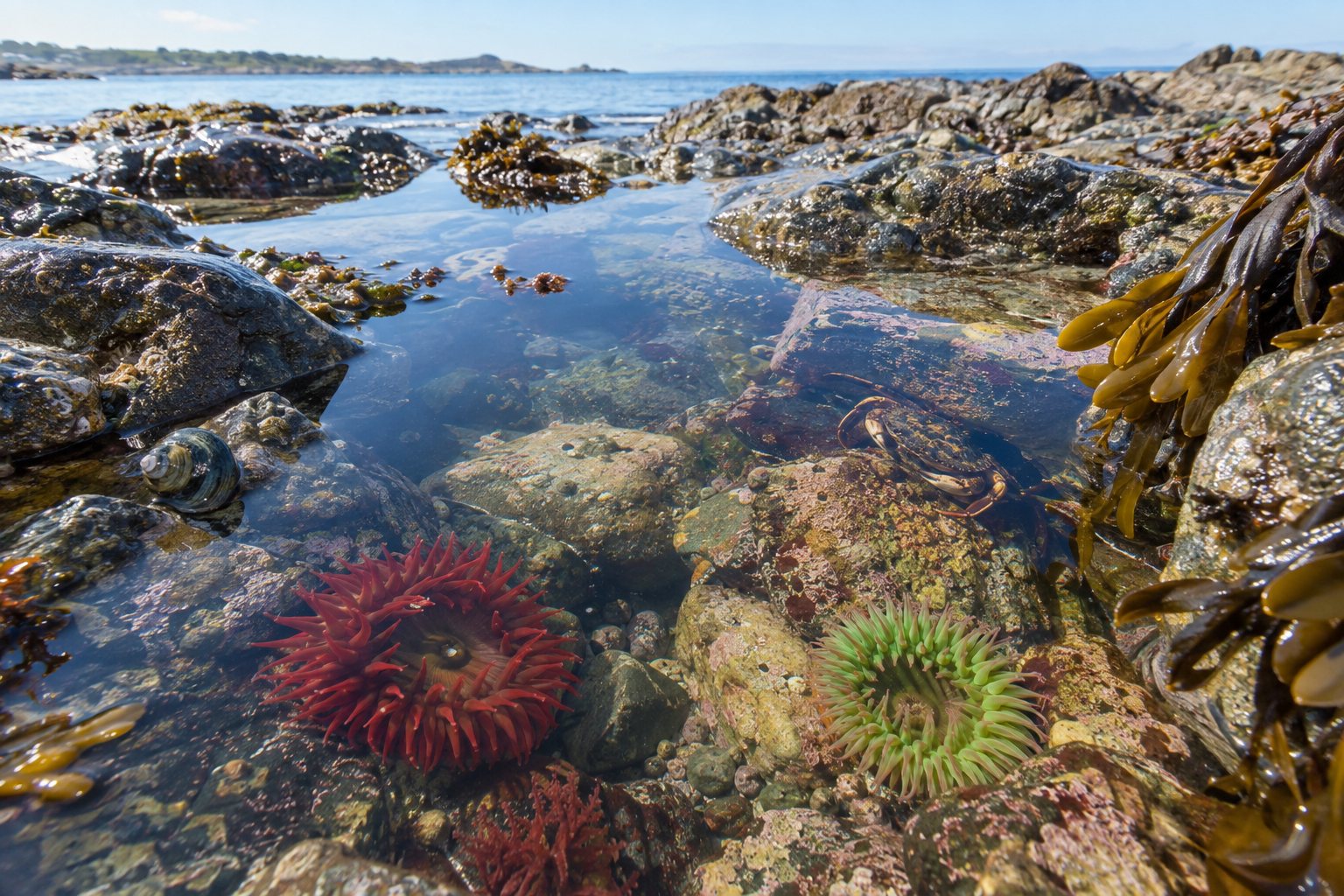
A tide pool is a whole world left behind by the sea. For a few hours at low tide, crabs, anemones, snails and tiny fish are sitting in a puddle you can crouch next to, and the sea will be back for them before long.
Tide pooling with kids is one of the best free days out there is. It takes a little planning, because the tide decides when you can go, and a little care, because rocks are slippery and the sea comes back. Here's how to time it, how to stay safe, what you might find, and how to leave every pool the way you found it.
When is the best time to go tide pooling?
Go at low tide, and get there before it. Aim to arrive an hour or so before low tide, while the tide is still going out. That way the shore gets bigger while you explore, and you're not racing the water back. Head back as the tide turns.
Spring tides are the best tides. This has nothing to do with the season. Spring tides happen around every new moon and full moon, when the sun and moon line up. They give the highest high tides and the lowest low tides, uncovering pools that are underwater the rest of the time.
Check the tide times before you go, for the exact beach you're visiting.
In the US, NOAA's Tides & Currents website has free tide predictions for thousands of stations along the coast. On the Pacific coast there are usually two low tides a day and one is often much lower than the other, so look for a "minus tide", a low tide below zero on the chart. Those uncover the best pools.
How do you stay safe on the shore?
The shore is safe when you respect it. These are the big ones:
- Watch the tide the whole time. It can come in faster than you expect and cut you off on a rock, a sandbar or around a headland. An adult should keep an eye on the water and a clock, and turn everyone back early.
- Walk, don't run. Seaweed-covered rocks are as slippery as ice. Walk slowly, and use your hands on the rocks when it's steep.
- Wear shoes with grip. Old sneakers or water shoes are better than flip-flops or bare feet, and they protect toes from barnacles.
- Keep an eye on the waves. Stay back from the edge of the sea, and never turn your back on the waves near the water.
-
Stay together, and let someone at home know where you've gone.
-
In an emergency, call 911.
Follow the park rules. Many of the best US tide pools are in state parks, national parks or marine protected areas, and the rules there can be strict. In many protected areas, taking any tide pool animal, or even picking one up, is banned, and some ask visitors not to touch at all. Read the signs, ask a ranger, and when in doubt, look with your eyes only.
What do you need?
Not much:
- A clear or white bucket or tub, filled with seawater, for a short, careful look at one creature.
- A magnifier.
- A spotter guide for your coast, or the list below.
- A towel and a change of socks. Someone always gets a wet foot.
Hands and eyes do most of the work. Sit still next to a pool for a minute and it comes alive: shells walk, weed wriggles, and a crab you didn't see steps out from under a ledge.
What will you find in a tide pool?
On the Pacific coast
- Ochre sea stars. Big, knobbly sea stars in orange or purple, clinging to rocks low on the shore. Their numbers crashed in many places after a sea star wasting disease outbreak that began in 2013, so every one is worth celebrating.
- Giant green anemones. Bright green, and when open they can be bigger than a child's hand.
- Hermit crabs. Crabs living in borrowed snail shells. Watch one for a while and it may come out to explore.
- Purple sea urchins. Spiky purple balls tucked into rock hollows.
On the Atlantic coast
The rocky shores of New England, especially Maine, have some of the best tide pooling on the East Coast.
- Green crabs. The most common crab there, and the same species British children call the shore crab. It arrived from Europe on ships in the 1800s.
- Periwinkles. Small snails grazing on the rocks. The common periwinkle is thought to have come from Europe too.
- Barnacles. Tiny cones on the rocks. Underwater, they open up and kick their feathery legs out to catch food.
- Sea stars. Look in the lowest, deepest pools and under seaweed.
The golden rules of tide pooling
These keep the pools healthy for the animals, and for the next family.
- Turn rocks back the right way up. Anything living underneath needs the shade and damp. Put rocks back gently, exactly where they were.
- Don't pull limpets or anemones off the rocks. They can be damaged and may not survive. The same goes for seaweed, which can't reattach.
- One creature, one bucket, one short look. Keep the bucket in the shade with fresh seawater, and don't keep anything long.
- Put animals back where you found them, gently and close to the water, not dropped from a height.
- Take photos, not animals. Nothing comes home except memories and pictures.
Off you go
Pick a low tide, check the times, pack shoes with grip, and let the kids lead the way from pool to pool. The best finds usually come to whoever sits still the longest.
If you'd like to know what we're up to: we're building Scout, a nature camera for kids aged 9 to 13, shaped like an explorer's magnifying glass and worked with one thumb, launching on Kickstarter in spring 2027. When a child points it at something alive, their guide names it right there on the walk, using Scout's own AI chip, and back home every new find becomes a Discovery Card in their collection. It's made for days like this, where the only thing you take home is a picture.