Winter backyard birds to spot from your window (and how to feed them safely)
For families who want to start birdwatching this winter without leaving the house. You'll get the birds most likely to visit, one easy clue for each, and simple rules for feeding them well.
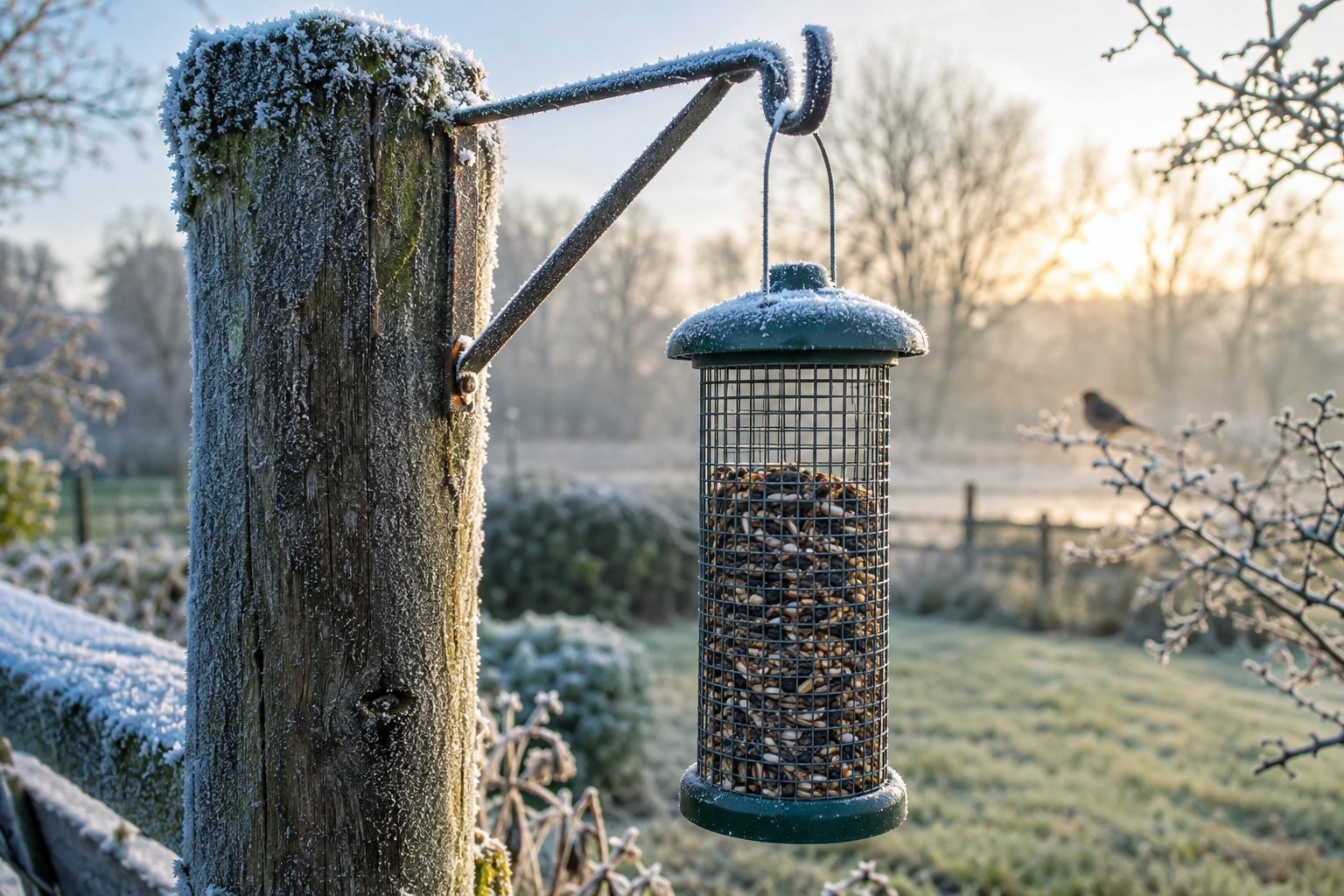
When the trees are bare and it's too cold to stay out for long, the window becomes the best bird blind in the house. Winter backyard birds are easier to watch now than at any other time of year: there are no leaves to hide behind, and hungry birds come close for food. This guide gives you the birds most likely to turn up, one tell-tale clue to name each, and how to feed them safely.
Why is winter a good time to start birdwatching?
- Bare branches. A bird that would vanish into summer leaves sits in plain view.
- Birds come to you. Natural food is harder to find, so feeders and berry bushes are busy.
- Visitors arrive. Some birds travel from colder places to spend the winter with you.
- Short days. Birds feed hard from first light, so a few minutes at breakfast is often the best time to look.
All you need is a window, a notebook and a bit of patience. Binoculars help, but they aren't essential.
Which winter birds might you see?
Pick one clue per bird and look for that first. Most birds can be named from one good clue.
| Bird | The clue to look for |
|---|---|
| Northern cardinal | The male is bright red with a pointed crest. The female is warm brown with the same thick orange-red beak. |
| Black-capped or Carolina chickadee | A black cap, a black bib and white cheeks. Black-capped chickadees live in the North, Carolina chickadees in the South. They look almost the same. |
| Dark-eyed junco | Slate-gray on top, white underneath, and white outer tail feathers that flash when it flies. Often called the "snowbird" because it arrives for winter. |
| Blue jay | Big, blue and loud, with a crest and a black "necklace". |
| American goldfinch | Not gold in winter! Look for a plain brownish bird with black wings and two pale wing bars. |
| Downy woodpecker | Small and black and white, with a bill much shorter than its head. The look-alike hairy woodpecker has a much longer bill. |
| Tufted titmouse | A small gray bird with a pointed crest, big black eyes and rusty sides. |
| White-breasted nuthatch | The bird that walks head-first down tree trunks. |
| Mourning dove | Slim and soft brown, with a small head and a long pointed tail. Its wings whistle when it takes off. |
| House finch | The male has a red head and chest and a brown streaky belly. The female is plain streaky brown. |
This list suits most of the East and Midwest. If you live out West, you're more likely to see a Steller's jay or a scrub-jay than a blue jay, and cardinals and tufted titmice are rare or missing across much of the region. The free Merlin Bird ID app from the Cornell Lab can show you which birds are likely where you live.
How do you tell birds apart?
If a bird isn't on the list, try these four questions before reaching for a book or app:
- How big is it? Smaller than a sparrow, about the same, or pigeon-sized?
- What shape is it? Chunky or slim? Long tail or short? Thick seed-cracking beak or thin insect-picking one?
- Where are the colors? A cap, a bib, a wing stripe, a patch under the tail.
- What is it doing? Hopping or walking? Hanging upside down? Climbing up a trunk, or down?
Write your answers down or make a quick sketch, even if you can't name the bird yet. Naturalists call these field notes, and they're how every expert started.
How do you feed winter birds safely?
Feeding birds in winter can really help them, but a busy feeder can also spread disease. These are the current tips from the big bird charities.
- Keep it clean. Audubon suggests scrubbing feeders with soap and water about every two weeks, more often in warm, damp weather, then soaking them in a vinegar-and-water mix. A grown-up should handle the cleaning.
- Rake up the mess. Old seed and hulls under a feeder can go moldy.
- Good food: black-oil sunflower seed pleases the most kinds of birds, and suet is great in cold weather.
- Peanuts unsalted, shelled, and in a mesh feeder so birds take small pieces.
- No bread or crackers. They fill birds up without giving them what they need.
- Sick birds? If birds at your feeder look fluffed up and sleepy, take the feeders down for a week or two and clean them. If your state wildlife agency asks people to take feeders down during a disease outbreak, do.
Water matters too. Birds need to drink and bathe even in freezing weather. Put out a shallow dish of fresh water and change it every day. On frosty nights, float a ping-pong ball on it so the breeze keeps the surface moving, or top it up with warm (not boiling) water. Never add salt or antifreeze.
Think about windows. Put feeders either very close to a window, within about 1 meter (3 feet), or well away from it, more than about 10 meters (30 feet). Close up, a bird can't build enough speed to hurt itself if it hits the glass.
Wash your hands after filling or cleaning feeders.
How can you make winter birdwatching a game?
- Keep a window list. Tape a sheet of paper by the window and add every new bird with the date. How many can you get by spring?
- Count the most at once. Birdwatchers count the biggest number of each kind seen together, not every visit, so they don't count the same bird twice.
- Draw one bird a week. You'll notice things you never saw before, like the white tail feathers a junco flashes as it takes off.
- Join a real count. The Great Backyard Bird Count usually runs over four days in mid-February. You can take part for as little as 15 minutes, and your sightings help scientists track how birds are doing.
A warm window, a cold morning
Winter birdwatching is about noticing: the same few birds, day after day, until you know who's the bossiest at the feeder and who always arrives last. Start with one bird you can already name, then add one more. By the time the first spring songs start, you'll have a whole cast of neighbors you know by sight.
Sources
- RSPB: Bird feeding advice: feed seasonally and safely
- RSPB: How and what to feed your garden birds
- Garden Wildlife Health: Trichomonosis in garden birds
- Audubon: How to feed birds safely this winter
- Cornell Lab of Ornithology, All About Birds: Where to put your bird feeder
- Cornell Lab of Ornithology, All About Birds: American goldfinch and Downy woodpecker
- BTO: Redwing and Fieldfare
- RSPB: Big Garden Birdwatch
- Great Backyard Bird Count: birdcount.org