Bird songs for beginners: learn five songs first, with easy memory tricks
For families who hear birds every day but can't yet tell one song from another. You'll get five songs to start with, a memory trick for each, and free tools to check your answers.
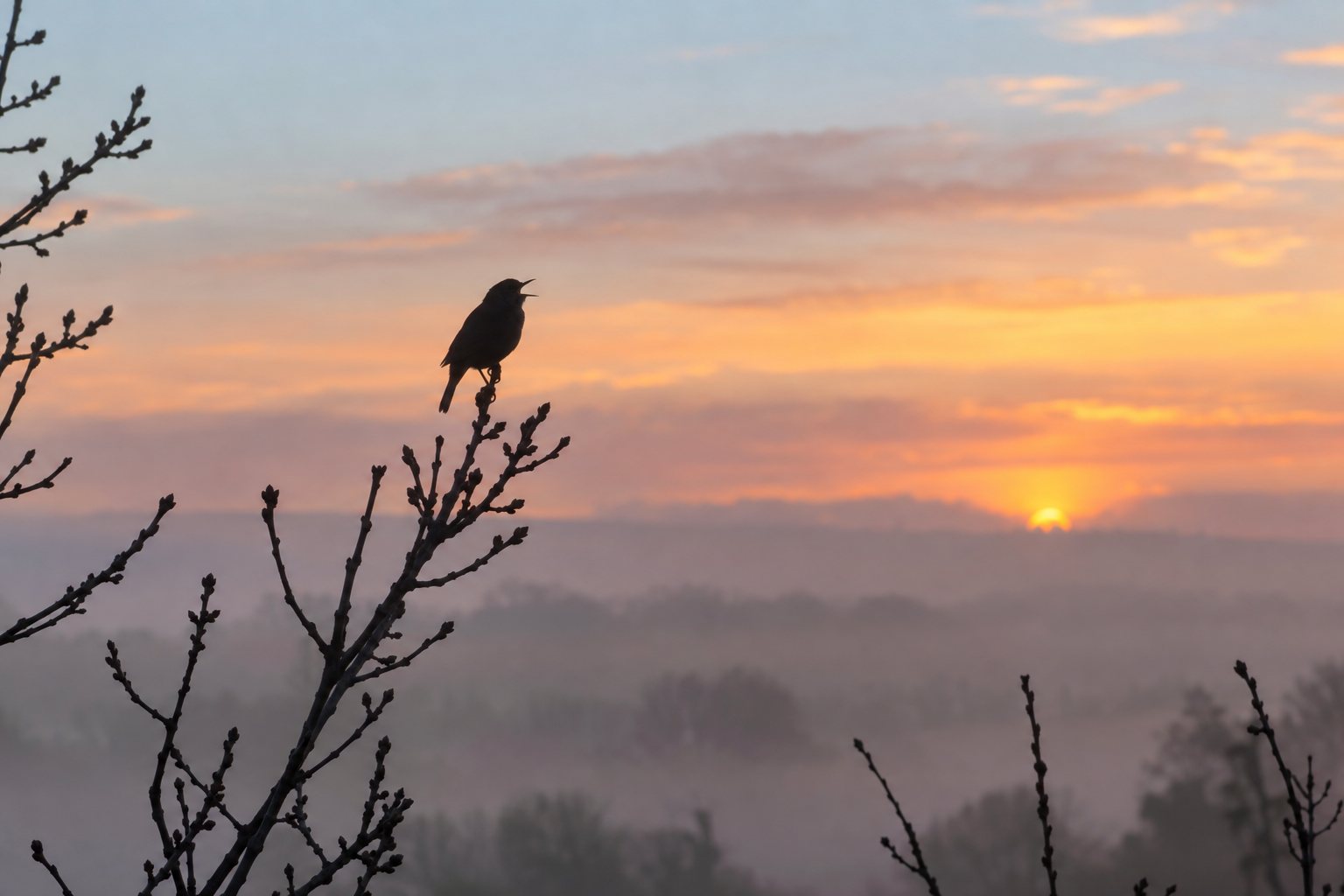
Every morning there's a concert going on outside your window, and most of us have no idea who's singing. The good news is that bird songs for beginners are much easier than they sound. You don't need to learn hundreds. Learn five common songs well, and suddenly a walk sounds like a room full of friends. This guide gives you the five to start with where you live, a memory trick for each, and free tools to check your answers.
Why do birds sing?
Mostly for two reasons:
- To claim a patch. A song says "this is my territory, keep out" to other birds of the same kind.
- To attract a mate. A strong, varied song shows off a healthy bird.
In many species it's mostly the males that sing, but not all: female cardinals, for example, sing too.
Songs are different from calls. A song is usually longer and more musical, used for territory and mates. A call is short, like "chip!" or "tsee!", and is for everyday messages: "I'm over here", "food!" or "danger!". Calls are useful all year, while most birds sing most in late winter and spring.
When is the best time to listen?
At dawn, in spring. The dawn chorus is when birds sing hardest, starting before sunrise. It builds from late winter and is at its loudest around May. International Dawn Chorus Day is the first Sunday in May, a great excuse for an early alarm.
Why dawn? Scientists are still working it out. Ideas include that it's too dark to find food yet, so singing is a good use of the time, and that birds re-announce their territory after a night of silence. A recent study tested one popular idea, that sound carries better at dawn, and didn't find evidence for it. It's a real, open question.
Winter is a good time to start too: fewer birds are singing, so each song is easier to pick out.
Which bird songs should beginners learn first?
Start with birds that are common, loud and easy to see while they sing.
| Bird | What it sounds like | Memory trick |
|---|---|---|
| Northern cardinal | Loud, clear, sliding whistles repeated in a run. Females sing too. | "Cheer-cheer-cheer!" or "birdie-birdie-birdie!" |
| American robin | Cheerful, caroling phrases that rise and fall, often among the first songs at dawn. | "Cheerily, cheer-up, cheerio!" |
| Black-capped chickadee | A clear two-note whistle, the second note lower. It also says its own name as a call. | Song: "Fee-bee." Call: "Chick-a-dee-dee-dee!" |
| Mourning dove | A soft, sad-sounding hoot that people often mistake for an owl. | "Hoo-OO-oo, hoo, hoo." |
| Song sparrow | Three or four clear notes, then a jumble and a trill. | "Maids, maids, maids, put on your tea-kettle-ettle-ettle!" |
Bonus bird: the blue jay. A loud "jay! jay!", but blue jays also copy the scream of the red-shouldered hawk, so a hawk you hear might be a jay playing tricks.
Two fun extras. In the South, the Carolina chickadee sings four notes instead of two: "fee-bee, fee-bay". And listen to a chickadee's "dee" notes: scientists found that when chickadees spot a small, dangerous predator such as a small owl, they add more "dee" notes to their alarm call. More dees, more danger. Mourning doves have a signal too: their wings make a whistling sound when they take off in a hurry.
How do you learn a bird song?
- One bird at a time. Pick the loudest singer on your street and learn it well before adding another.
- Find the singer. Follow the sound and look for an open beak and a throat that moves. Seeing and hearing together makes it stick.
- Make your own memory trick. The silliest ones work best. If a song sounds like "pizza-pizza-pizza" to you, that's your trick.
- Draw the song. Wiggly lines for trills, dots for short notes, lines going up or down for rising or falling whistles. Scientists draw songs as pictures too (they're called sonograms).
- Listen in the same spot. A few minutes on the same doorstep each morning shows you who lives nearby.
- Keep calm about mistakes. Some birds copy others, and young birds practice wobbly versions of their songs. Everyone gets fooled sometimes.
Which free tools can help?
- Merlin Bird ID from the Cornell Lab of Ornithology is a free app. Its Sound ID feature listens on a phone and suggests which birds are singing, and it works in both the UK and the US. Download your region's bird pack first and it works offline, too. Use it as a helper, then try to spot the bird yourself to be sure. A grown-up's phone is perfect for this.
- xeno-canto is a free website of bird sound recordings shared by volunteers from all over the world. Search for any bird and listen to many versions of its song, which helps because birds, like people, have accents.
- All About Birds, also from the Cornell Lab, has a sounds page for each common North American bird.
Put your ears to work: join a bird count
The Great Backyard Bird Count usually runs over four days in mid-February. You count birds for as little as 15 minutes, anywhere you like, and your sightings help scientists track how birds are doing around the world.
Start tomorrow morning
Open a window, or stand at the back door, for five minutes before breakfast. Don't try to name everything. Just pick out one voice, then find the bird that owns it. By spring, the morning concert will be full of singers you know by name.
Sources
- The Wildlife Trusts: Dawn Chorus Day
- KGOU / NPR: A new study knocks down a popular hypothesis about why birds sing at dawn
- Discover Wildlife: European robin facts
- BTO: Chiffchaff
- RSPB: Bird song identifier
- Cornell Lab of Ornithology, All About Birds: 30 mnemonics to help you remember bird calls, Blue jay and Mourning dove sounds
- Templeton, Greene and Davis (2005), Science: Allometry of alarm calls: black-capped chickadees encode information about predator size
- Cornell Lab of Ornithology: Merlin Bird ID and eBird: Merlin Sound ID is coming to Europe
- xeno-canto: xeno-canto.org
- RSPB: Big Garden Birdwatch
- Great Backyard Bird Count: birdcount.org