Citizen science for kids: how your child's sightings can help real scientists
For parents of curious 9 to 13-year-olds who want their nature spotting to count for something. You'll get how it helps, which projects to join and when, and how to keep your child's details private.
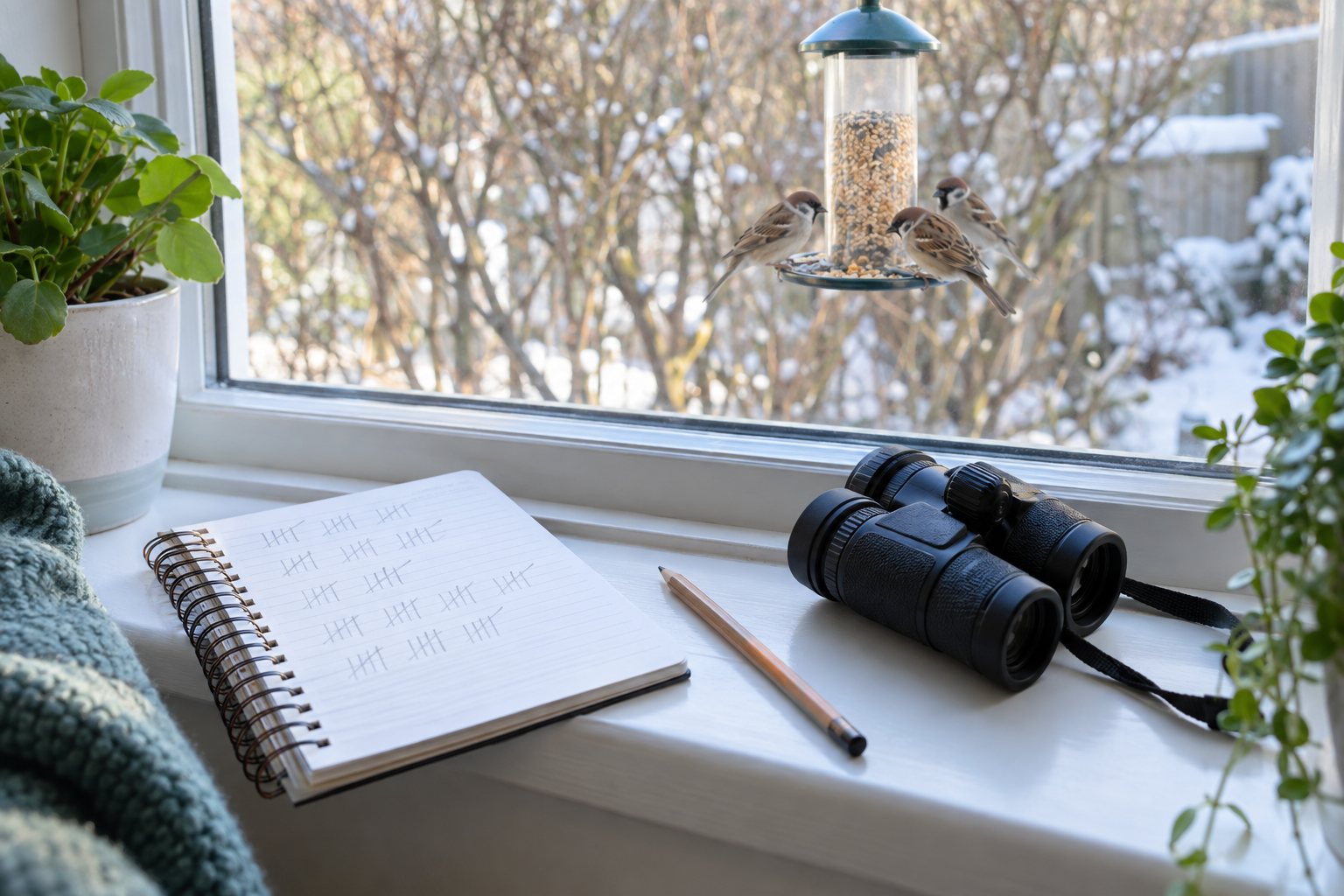
Scientists can't be everywhere. They can't count every sparrow on every feeder, or spot the first butterfly of spring in every park. But hundreds of thousands of families together can. That's citizen science: ordinary people, including children, collecting real observations that researchers use to track how nature is changing.
Citizen science for kids is one of the best ways to turn "we saw a bird" into "we helped science". This guide covers how it works, the best projects to join and when they run, and the privacy and age rules parents need to know, especially for apps.
How can a child's sightings help real science?
A single sighting doesn't tell a scientist much. Thousands of them, each with a what, a where and a when, can show:
- which species are becoming more common or rarer, and where;
- whether birds, butterflies and flowers are arriving earlier in the year than they used to;
- where a species is spreading, including ones that don't belong.
The numbers can be huge. The Christmas Bird Count has run every winter since 1900, which gives scientists more than a century of records to compare. No research team could ever collect that alone.
Children are good at this. They notice small things, they don't mind counting, and they love having a real job to do.
iNaturalist and Seek: the app route, and the age rules
iNaturalist is a free platform where people share photos of living things, and a community of naturalists helps name them. When enough people agree on what a sighting is, it becomes "Research Grade" and can be shared with the Global Biodiversity Information Facility (GBIF), where scientists use it. iNaturalist records have been used in thousands of scientific papers.
The age rule. iNaturalist accounts are for people aged 13 and over. For a child aged 12 or under, a parent or guardian has to create the account through iNaturalist's special minor-account page, which asks for a US$1 donation by credit or debit card to confirm you're an adult. iNaturalist says an account found to belong to someone under 13 without a parent's permission will be suspended.
Privacy. Every iNaturalist observation is public, and shows roughly where and when someone was. For sightings at or near home, use the geoprivacy setting to hide the exact location, and don't use your child's full name as their username.
Seek by iNaturalist is the gentler option for younger explorers. It needs no account, keeps records on your own device by default, and blurs your location. Its sightings don't go to scientists unless you sign in to an iNaturalist account and choose to share them, so many families start with Seek and move on later.
Projects to join through the year
Great Backyard Bird Count (mid-February)
Run by the Cornell Lab of Ornithology and the National Audubon Society (with Birds Canada), it has been going since 1998 and worldwide since 2013. Count birds for at least 15 minutes, on one or more of four days, anywhere you like, and send your list online. It usually runs over the long weekend in mid-February; in 2026 it was February 13 to 16.
Audubon Christmas Bird Count (December 14 to January 5)
The oldest citizen science project of its kind: it began on Christmas Day 1900. Each count takes place on one day between December 14 and January 5, inside a 15-mile-wide circle, organized by a local compiler. Beginners are welcome to join a group with experienced birders, and if you live inside a count circle, you may be able to count at your own feeder by arranging it with the compiler.
Journey North (spring and fall)
A free project from the University of Wisconsin–Madison Arboretum that tracks migration and the seasons. Families report sightings of monarch butterflies and their milkweed, hummingbirds and other signs of spring and fall, and watch the migration build on a live map.
eBird (any time)
Also from the Cornell Lab, eBird lets you send in bird lists from anywhere, all year round. Its terms say it isn't for children under 13, so a grown-up signs up and the family enters its lists together.
Project FeederWatch (November to April)
Count the birds at your feeder on days you choose, from November to April. In the US it costs $18 a year ($15 for Cornell Lab members), which pays for materials and the year-end report; in Canada, it runs on donations. A grown-up signs up.
A year at a glance
| When | Project | Time it takes |
|---|---|---|
| Mid-February | Great Backyard Bird Count | 15 minutes or more |
| Spring and fall | Journey North | A minute per sighting |
| November to April | Project FeederWatch | A count day when you choose |
| December 14 to January 5 | Audubon Christmas Bird Count | One count day |
| Any time | eBird, iNaturalist or Seek | As long as you like |
Dates move a little from year to year, so check each project's website before you plan.
How to make a good record
Scientists can only use what they can trust. Teach these habits:
- Write down what, where and when, including the date and roughly the time.
- Only record what you're sure of. "A small brown bird" is honest; a guess written as a fact isn't. Many projects are happy with "unknown".
- Count carefully, and don't count the same bird twice. That's why Project FeederWatch asks for the most you see at one time.
- Zero counts count. If you watched for an hour and saw no butterflies, that's useful information too.
- Take a photo if you can, so someone else can check it.
Taking it further
Scout, the handheld nature camera for kids aged 9 to 13 that we're launching on Kickstarter in spring 2027, is built around the same habit of honest recording. It would rather say "I'm not sure" than tell a child something wrong, and it only names a group when it's right at least 85 times in 100. Back home, every new find joins a collection and a map of the places they explored.
Your child, the scientist
The best thing about citizen science is what it does to how children see a walk. A robin on the fence isn't just a robin any more; it's a record, a piece of evidence, a small part of something much bigger. Pick one project this season, put the date on the fridge, and count together.
Sources
- iNaturalist Help: How can I make an account for my child who is under 13?
- iNaturalist: Terms of use
- iNaturalist Help: How are iNaturalist data used for research?
- eBird: Great Backyard Bird Count 2026
- Audubon: History of the Christmas Bird Count
- Audubon: Join the 126th Christmas Bird Count
- Journey North
- Cornell Lab of Ornithology: Terms of use
- Project FeederWatch: Join or renew