A fall nature scavenger hunt: 20 things to find (with points)
For parents of 9 to 13 year olds who want a walk with a bit of competition in it. You'll get a ready-made list of 20 finds with points, ways to make it a real challenge, and the safety rules that matter.
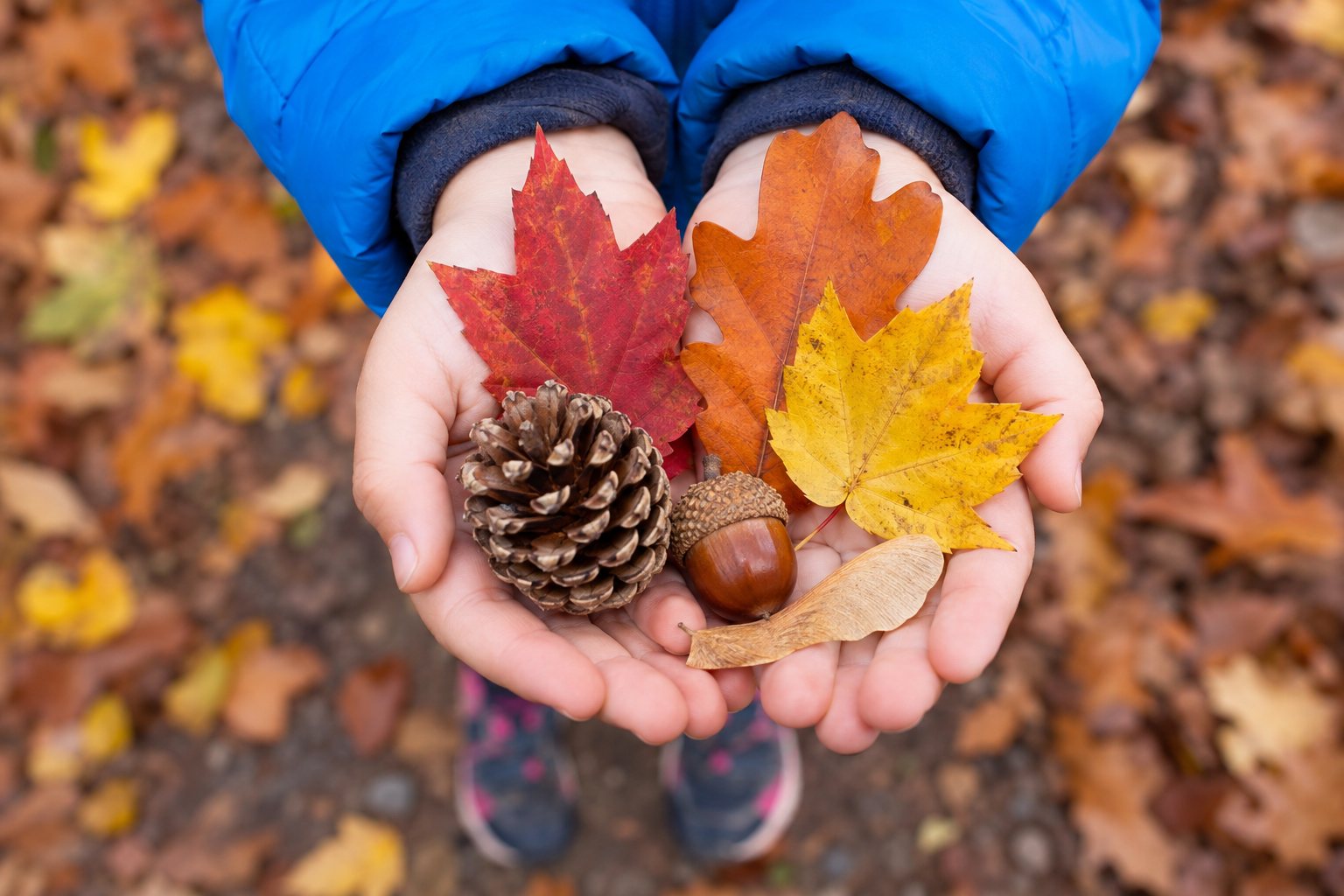
A fall nature scavenger hunt is one of the easiest ways to get a 9 to 13 year old out of the door and actually looking. The trick at this age is to make it a proper challenge, not a toddler's tick-list. Below you'll find a list of 20 things to find, a points system, ways to play with photos and sketches instead of picking, and the few safety rules worth knowing.
The list works anywhere with a few trees: a park, a wood, a greenway or a quiet street. About half of it is the same on both sides of the Atlantic. The rest changes with where you live, because a British wood and an American one hold different animals and plants.
How to run a scavenger hunt for 9 to 13 year olds
Younger kids are happy just finding things. Older kids want a reason to try harder. A few rules turn a stroll into a game:
- Points, not ticks. Easy finds score 1, trickier ones 2, and the hard ones 3. The table below has the points already.
- Proof counts. A find only scores if there's proof: a photo, a sketch, or a grown-up witness. This stops "I definitely saw a raccoon" arguments.
- Photos, not picking. Most things stay where they are. Photograph them, then leave them for the next person (and the animals that need them). The only things to collect are fallen, plentiful ones, like a single leaf or acorn.
- Sketch bonus. Any find drawn in a notebook scores one extra point. It doesn't have to be good. Drawing makes you look properly, and that's the point.
- Teams of two. Pair a keen spotter with a keen photographer. Mixed ages work well if the older one is in charge of the camera and the younger one is in charge of the list.
- A time limit. Forty-five minutes is plenty. Agree a meeting spot and a signal to regroup.
Want it harder? Add a "same find, better proof" rule: a second team can steal a find by bringing back a sharper photo or a better sketch of it.
The fall scavenger hunt list
Found almost everywhere
| # | Find | Points |
|---|---|---|
| 1 | A leaf in three different colors at once | 1 |
| 2 | A seed with wings (a maple or ash "helicopter") | 1 |
| 3 | An acorn still wearing its cup | 1 |
| 4 | A spider's web with dew or raindrops on it | 2 |
| 5 | A mushroom or toadstool (photo only, no touching) | 2 |
| 6 | A gray squirrel carrying or burying something | 2 |
| 7 | A pine cone (bonus point if it's been nibbled into a "core") | 1 |
| 8 | Something with a hole in it made by an animal | 2 |
| 9 | A bird eating berries or seeds | 2 |
| 10 | Two trees you can tell apart by their bark alone, eyes shut | 2 |
| 11 | A berry that birds eat (photo only, never taste) | 2 |
| 12 | The biggest leaf you can find. Measure it with your hand span | 1 |
Found in the US
| # | Find | Points |
|---|---|---|
| 13 | An acorn that's been cracked open by an animal | 2 |
| 14 | A woolly bear caterpillar (black at both ends, rusty brown in the middle) | 2 |
| 15 | A milkweed pod splitting open to show its silky seeds | 2 |
| 16 | A northern cardinal, or in the West, a dark-eyed junco | 2 |
| 17 | A red maple or sweetgum leaf in full red | 1 |
| 18 | A goldenrod or aster still in flower, with a bee on it | 2 |
| 19 | A flock of Canada geese flying in a V | 2 |
| 20 | A chipmunk with bulging cheeks | 3 |
Did you know? Folklore says the wider the brown band on a woolly bear, the milder the winter. Scientists who studied it found the band width depends on the caterpillar's age and how wet its summer was, not the weather to come. The caterpillar is the young stage of the Isabella tiger moth, and in fall it's on the move looking for a sheltered spot to spend winter.
Cardinals live mostly in the eastern half of the country and parts of the Southwest, and are rare west of the Great Plains. That's why the West gets the junco instead.
Scoring: 25 points is a good walk. 35 is a great one. Anyone who finds all 20 gets to choose dinner.
Bonus challenges for older kids
If your 12 year old is finishing in twenty minutes, add a few of these:
- The mystery find. Photograph something you can't name. Back home, work out what it is using a field guide or a library book. Worth 3 points once named.
- The sound find. Stand still for one minute with eyes shut. Count how many different sounds you hear. One point for every three sounds.
- Sequence it. Find the same kind of leaf in green, yellow, orange and brown, and photograph them lined up like a color chart.
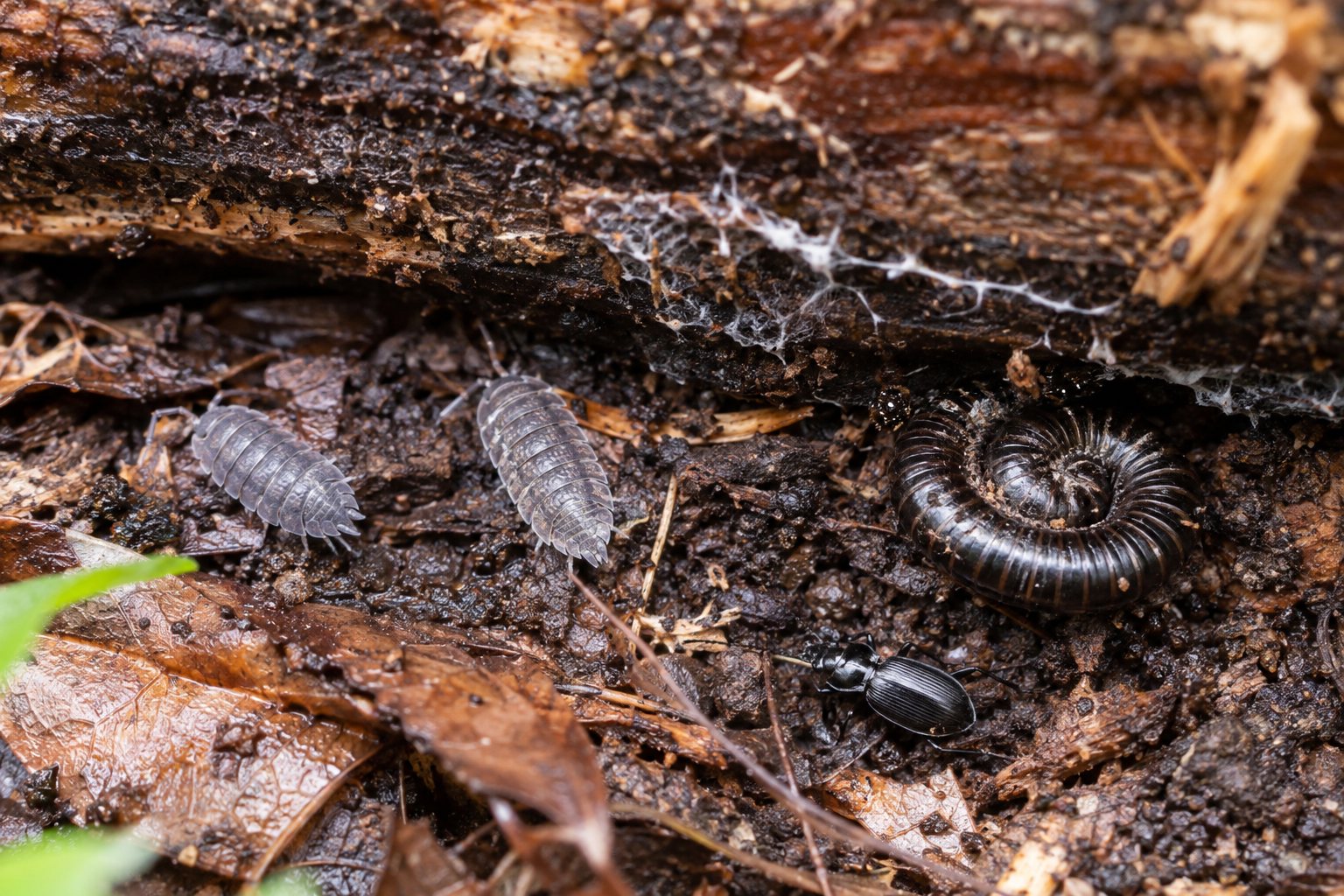
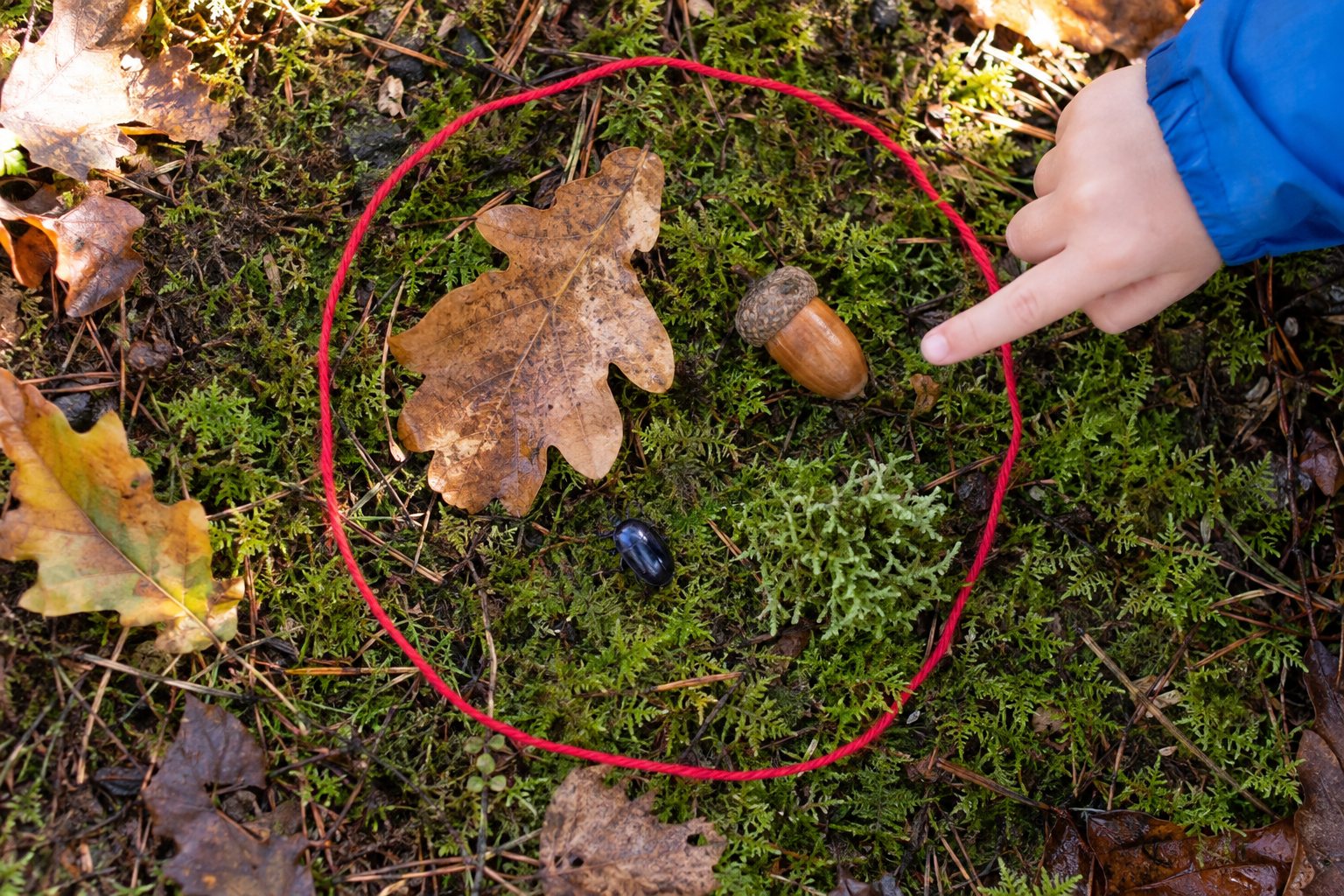
- Tiny safari. Find five living things within one arm's length of where you're standing. Beetles, woodlice and moss all count.
- Signs, not sightings. Find three signs that an animal was here without seeing the animal: a footprint, a feather, a nibbled cone, droppings (look, don't touch).
Staying safe on a fall scavenger hunt
A few simple rules keep everyone well and keep the walk fun.
- Never touch or taste wild fungi. Some are deadly and many look alike. Photograph them where they grow.
- Never eat wild berries or nuts unless a grown-up who really knows has picked and checked them.
-
Wash hands after the walk, and before any snacks.
-
Milkweed sap is an irritant. Look at the pods, and if anyone touches the plant, keep hands away from eyes until they've been washed.
-
Woolly bears are best watched, not held. Their bristles can make some people's skin itchy. Let one walk onto a leaf if you want a closer look.
-
Check for ticks after walking through long grass or brush, especially around the waist, behind the knees and along the hairline.
- Stay in sight or in earshot. Agree a meeting spot and a whistle or call signal before the hunt starts.
- Leave nests alone, even empty-looking ones.
- Follow the rules of the place. The Leave No Trace principles are a good guide: stay on trails, leave what you find, and give wildlife plenty of space.
Keep your finds
The photos and sketches are the real prize. Print a few, stick them in a notebook with the date and the place, and you've started a nature journal without trying. Next fall you can do the same walk and see what's changed.
Have a great hunt. Bring snacks, bring a bag for trash, and bring the competitive spirit.
Sources
- The Wildlife Trusts, Fly agaric
- Vocal performance during spontaneous song is equal in male and female European robins, Animal Behaviour
- Ohio State University Extension, Woolly Bears and the Winter's Tale
- Cornell Lab of Ornithology, Northern Cardinal range map
- Poison Control (National Capital Poison Center), Milkweed plants can cause serious poisoning
- GOV.UK, The Countryside Code
- Leave No Trace, The 7 Principles